|
|
|
|
Moving an antibody-drug conjugate (ADC) or antibody-oligonucleotide conjugate (AOC) from concept to clinic requires more than scientific innovation. Regulatory and bioconjugation experts Jeffrey Mocny and Nicolas Camper discuss what can help teams avoid costly delays and strengthen their path to the clinic.
|
|
|
|
|
From physicochemical characterization and potency assays to conjugate-specific testing for ADCs, learn why every analytical method should align with your target product profile and regulatory expectations. Explore the framework for developing a robust, science-driven release strategy.
|
|
|
|
|
AOCs are gaining clinical momentum, but manufacturing remains one of the biggest hurdles to successful development. Here, we cover five critical challenges — from oligonucleotide synthesis impurities and conjugation chemistry to process scalability — and how addressing them early can keep your program on track.
|
|
|
|
|
The most costly mistakes in an ADC program are made during upstream development and CMC. These missteps become program-ending events or lead to significant approval delays. To ensure a strategic competitive advantage, sponsors must frontload risk identification and mitigation to protect their late-stage programs.
|
|
|
|
|
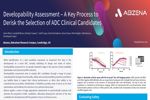
Selecting the wrong ADC clinical candidate is expensive. This poster details a systematic developability framework covering antigen binding by SPR, cell viability, bystander activity, serum stability, and biophysical manufacturability — helping teams identify liabilities early and progress the strongest leads.
|
|
|
|
|
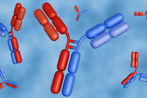
This webinar explores key principles and best practices for designing successful bispecific antibodies. Dr. Timothy Wood, Ph.D., Senior Scientist at Abzena, discusses intelligent bispecific design, emphasizing factors like avidity, spacing, and the configuration of Fab and scFv arms.
|
|
|
|
|
|
|