
Cell Line Development: Complex Biologics Development Bispecific Fusion Nanobody
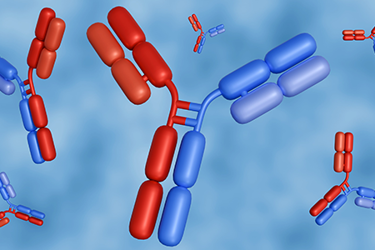
Bispecific antibodies (BsAbs) and nanobody fusion constructs sit at the more technically demanding end of the biologics development spectrum. Getting from a lead sequence to a stable, high-expressing cell line — without compromising product quality attributes — is where a lot of programs lose time. This case study shows how that challenge played out in practice for a clinical-stage oncology company developing a VHH camelid nanobody with cytokine fusion, known as a bispecific fusion nanobody (BFN).
Starting in 2024, the program moved through cell line development (CLD), upstream process development (USP), downstream process development (DSP), and toward cGMP manufacturing. The ambr15 platform screened clones for growth, productivity, and product quality attributes, and the results held up: BsAb titers exceeded 7 g/L, 5 of 6 clones demonstrated stability beyond 60 generations, clonal research cell banks (RCBs) were generated, and DSP was successfully developed. Scale-up ran from ambr15 through 2L stirred-tank reactors (STRs) to 50L non-GMP, using Sartorius single-use bioreactors throughout.
If you're weighing CDMO options for a complex biologic, the productivity and stability numbers here are worth a close look. Access the full case study to assess how this integrated CLD-to-manufacturing approach maps onto your program's timeline and technical requirements.
Get unlimited access to:




Enter your credentials below to log in. Not yet a member of Outsourced Pharma? Subscribe today.