
Louis Garguilo
ARTICLES BY LOUIS
-
11/18/2015
“So you hire three FTEs to perform some route scouting or further route development, scale up, kilo lab work, or other services. For the year in India it’ll cost you around $150,000. In the U.S., it’ll be around $650,000. That’s a delta of $500,000. How do we consider these numbers? How should we think about this?”
-
 11/10/2015
Whether or not you agree with the FDA in its determination to collect “quality data” directly from all drug manufacturers – including CMOs – if the agency moves forward, the real question is this: Should that data, and any rating the agency assigns to individual manufacturing plants for quality standards or “quality culture,” be kept internal at the FDA or made public?
-
10/30/2015
“Even the heavenly bodies aligned perfectly. Our partnership with GSK was announced the day of the super-moon total-lunar eclipse.”
-- Richard Leduc, professor, Department of Pharmacology-Physiology, assistant vice-dean for knowledge transfer, Université de Sherbrooke, Sherbrooke, Québec
-
10/23/2015
Are graduating students and newly trained professionals aware there is an AMRI as well as an Amgen, a Cambrex as well as a Celgene, or a Lonza as well as a Lilly? Even if they are, why would they select the service providers? And why is it positive for for the biotechs and pharma companies if they do?
-
 10/9/2015
A brand-name outsourcing provider plays a role in an historic “arbitrage opportunity.” “I truly believe these deals represent the most interesting models – China capital and U.S. technology – for the coming decade,” says Tiecheng “Alex” Qiao of Ambrx Inc.
-
 10/6/2015
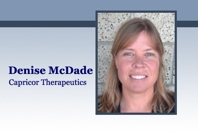
Something Denise McDade of Capricor Therapeutics said during a session at Outsourced Pharma West stuck in my mind: “Metrics are fundamentally important in measuring and managing any relationship, but there’s a paradox when it comes to outsourcing.”
-
 10/2/2015
Effective alliance managers with an underlying scientific fortitude allow for the growth of outsourcing, without a corresponding growth in the number of alliances, says Pfizer’s Sylvie Sakata.
-
 9/29/2015
I’ve got 6 shipments in limbo; 47 days on a tarmac; 58 borders in Europe … And they’re taxing me at every step I take …
-
 9/21/2015
I’m amazed in 2015 just the proposition of searching globally for CMOs is still a difficult decision for biotechs and other drug-developers. But because it is, I’ve captured some comments from industry experts at Outsourced Pharma West that may help.
-
 9/14/2015
Dauntless Pharmaceuticals isn’t the only company with a drug-development model based completely on outsourcing. Dauntless separates itself by where it takes the virtual-biotech model: It establishes a C-Corp for each compound it in-licenses. "From my management style, and viewpoint as a venture capitalist, this is how biotech should be done,” says Joel F. Martin, president and CEO.





Louis Garguilo
Click here to e-mail Louis
Louis Garguilo is chief editor of Outsourced Pharma, and is considered a leading authority on the art and science of drug development and manufacturing outsourcing. He studied public relations and journalism at Syracuse University (and holds a Master’s in English). His widely read editorials are based on in-depth analysis and interviews with industry executives and professionals. Editorials are written in an engaging and unique style that guide readers through the macro aspects and subtle nuances of outsourcing, and working with contract development and manufacturing organizations (CDMOs). Garguilo also serves as moderator for the various Outsourced Pharma Live webinars held throughout the year.
Prior to joining Outsourced Pharma in 2014, Garguilo spent a decade at a global pharmaceutical contract research, development and manufacturing organization, leaving the industry after attaining the role of vice president, business development and marketing. Additionally, he has served under the governor of New York in the state’s economic development agency, as liaison to the pharmaceutical/biotechnology industry; as chief strategic officer for an e-learning software company; and spent most of the ‘80s and ‘90s in Japan as an educator, author, and communications consultant.