
Japanese Physician Starts A Biotech, Selects A U.S. CDMO – Almost

By Louis Garguilo, Chief Editor, Outsourced Pharma

In Japan, a practicing medical doctor becoming an entrepreneur and the CEO of a biotech start-up is still relatively rare.
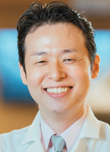
Rarer is when Yusaku Katada, M.D., Ph.D., founder and CEO, Restore Vision, selected a U.S. CDMO to usher his program through development and manufacturing.
That program is a visual-restoration, gene-therapy technology for inherited retinal disease ("IRD"). Many patients with these conditions have limited treatment options. Lead candidate RV-001 is in Phase 1/2; it utilizes an AAV vector to deliver a gene that encodes Restore Vision’s proprietary chimeric rhodopsin.
Regarding that U.S.-based CDMO selection, there’s quite an ironic twist. We’ll get there momentarily.
More Like The U.S.
(In a timely development, last month discoveries that established the field of optogenetics were recognized with the Nobel Prize in Physiology or Medicine.)
Katada’s prescient professors at Keio University, collaborators at Nagoya Institute of Technology, and others encouraged him to form a biotech to take their program forward.
“I had no idea about managing a startup,” recalls Katada from his office in Tokyo. At the same time, creating a company was consistent with his earliest motivations. “My goal has always been to create a new medicine for patients. In that sense, starting a company made sense.”
It did to him, but not universally throughout Japan.
Katada acknowledges that in 2016, when he founded Restore Vision at age 31 it was unusual for a physician-scientist to start a biotech while continuing academic research and clinical practice.
Having said that, Restore Vision was founded as that biotech environment was beginning to change. The prompting of his professors and fellow researchers to do a spinout.
Katada took advantage of growing government support for drug-discovery startups, including grants and other programs at the metropolitan and national-government levels.
Restore Vision also benefited from the emerging ecosystem by building connections with various biopharma professionals and investors early on, expanding his network beyond academia.
In 2019, Katada met Hikaru Miyazaki, who, although relatively young himself, had already worked at various start-ups in Japan. Miyazaki joined Restore Vision in 2020 as COO and vice president, and now serves as COO and co-representative director.
Together, they raised capital, built a streamlined organization, and eventually rode the biotech model to the U.S.
The Conference Connection
Restore Vision faced the challenge most all biotech start-ups encounter – the unfamiliar world of later-stage development, supply chain, and GMP manufacturing.
They started out in familiar territory, working with Japanese manufacturing partners for research materials and early development, but when RV-001 began moving to the clinic, requirements and strategy changed.
“We wanted to find a CDMO that could support process development, GMP manufacturing, regulatory matters all over the world, and also future scale-up for global supply.”
The Restore Vision team decided to attend the 2022 BIO International Convention in San Diego for its search, where they met with about a dozen potential CDMOs. A detailed RFP then winnowed those to a list of candidates based on an evaluation of AAV manufacturing prowess, GMP manufacturing capabilities for clinical and future commercial supply, scalability, capsid expertise, and location.
(A brief interlude here: a productive industry conference can be key to finding CDMO candidates – and eventual partners. In fact, we've been reassessing and confirming the importance of the global, in-person conference scene this year. Restore Vision is proof we are on track.)
Back to Katada’s selection criteria, he emphasized a critical item that doesn’t fit neatly into an RFP-scoring matrix.
“For us,” he says, “from the beginning, responsiveness, clear communication, and flexibility were also very much a part of the selection criteria.”
Let’s not assign these “soft attributes” to the “Japanese way of doing business.” Professionals around the world tell us these characteristics are so important today that they can become dealmakers or disqualifiers in final CDMO selection processes.
On the other side of the business, thought, and based on my prior experience as a business development professional focused on the Japan market for a global CDMO – the absence of “price” in Katada’s list of CDMO-selection requirements raises an eyebrow.
I challenge Katada on that omission. His reply: “The CDMO we selected was not the cheapest option.”
“The real considerations are, ‘What are we getting in total return for that cost, and which partner gives this program the best chance of success?”
Based on all the above, Restore Vision of Tokyo selected Forge Biologics of Columbus, Ohio, as its partner.
There’s yet another component of the Forge organization that Katada makes sure I am aware of: The CDMO is developing its own gene-therapy programs.
He likes the idea of his external partner gaining related experience right along with his company, and the potential synergies that may arise from that. Perhaps not a sentiment shared by all.
And now for that final piece of irony we hint at in our headline and above.
Sometime after Restore Vision began working with Forge Biologics, the CDMO was suddenly acquired by Japanese conglomerate Ajinomoto.
For Katada and team, this came as a shock.
We’ll talk more about what that meant for Restore, and overall on global biotech-CDMO relationships in a few weeks, but here's a good question to leave here:
Will more Japan biotechs start to team up with U.S.-based CDMOs?
I don’t see why not.