
Global Ties, Good Fortune Bind Biotech And CDMO

By Louis Garguilo, Chief Editor, Outsourced Pharma

Asset development and outsourcing strategies can be intriguing, and full of global connections.
Those attributes surface immediately in my conversation with Hyung Heon Kim, Chief Executive Officer and President, MetaVia, a Cambridge, Mass.-based biotech.
MetaVia targets obesity, and metabolic dysfunction-associated steatohepatitis (MASH) – a chronic liver disease also pursued by many others today.
While the company may have reformed recently in 2023, its roots trace back to 90 years of South Korean pharma history, and the pharmaceutical conglomerate Dong-A (pronounced Dong-Ah).
Tracing the CDMO that MetaVia works with and that supports the biotech from both China and U.S. locations, is also part of the organization’s history.
“Ours is a fun journey to tell,” says Kim.
Spread The Word Via World-Class Assets.
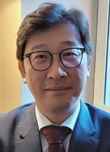
His “fun” journey begins in Seoul during the COVID crisis. “Nothing seemed to be moving,” he says, “but all executives were mandated to show up at work.”
Driving to his office one rainy day he was astonished at the few cars on the road. “What are we doing?” thought Kim. “Is there anything we can innovative during this period? Let’s use this as an opportunity.”
He and fellow executives came up with the idea of moving two promising metabolic assets into the U.S. market via the restructuring of an American biotech. Their current CDMO would be of major help here, they reasoned (and we’ll get to that in a moment).
“There were two goals,” Kim says. The obvious one was to bring those assets to commercial success in the world’s largest patient market. The other was “to show the world what Dong-A is capable of.”
“I was trying to establish a global identity, to go into different countries, like the Japanese pharma Takeda had done.”
“Listing on NASDAQ a biotech with two metabolic assets and Dong-A science and manufacturing as our vehicle for success was a great strategy to tell people there is a company in Korea that is historic and competitive” he explains.
Those two assets are DA-1241 (Vanoglipel), a first-in-class GPR-119 agonist, orally available small molecule drug candidate which finished Phase 2a in MASH; and DA-1726, a potential best-in-class GLP-1 and glucagon dual agonist, once weekly injectable peptide in the last stage of Phase 1 clinical trial.
Kim refers to these as “fully homegrown and manufactured,” but that doesn’t tell the whole story; there’s an important CDMO relationship we’ll now turn to.
CDMO To Trust Long Term
Dong-A started research programs on DA1241 and DA1726 in 2015, despite the fact the pharma company lacked internal expertise at the time in peptide manufacturing – including at their own CDMO.
They found assistance at Ambiopharm, Inc. (API), a mid-sized CDMO with manufacturing in Shanghai and operations in South Carolina.
Kim says, because Dong-A was well-versed in the business of CDMOs, they knew the building of trust is vital in a sponsor-provider relationship.
That building starts at due diligence, which is more than a test of capability and expertise, but of response, receptiveness, and a perceived willingness to do more than work together, but to prioritize a customer’s needs to the extent possible.
“Once you start a project and build on experiences, that's when you can seamlessly upscale and trust the CDMO’s true abilities will kick in for you,” says Kim.
The selection of Ambiopharm was based on this feeling of trust, but also the component of price, and, for example, obtaining the high-quality assurances Big Pharma would require should the assets be out licensed in the future.
There was one thing the selection was not based on: “This was 2018-19; we had no idea these two assets would be developed in the U.S. then. We had no concerns over geopolitical challenges.”
Dong-A was concerned, though, with engaging an external partner very early because while typically hey produced everything internally, peptides were not an area of expertise.
“Our experience told us that once you make a candidate selection and decide to go forward with GMP material, if you are outsourcing, you must find somebody you can trust as soon as possible.”
Today, as an American biotech, MetaVia takes advantage of those earlier decisions, and the cost efficiency and ample skilled workforce at Ambiopharm’s Chinese manufacturing site, while the QA and QC transpire in South Carolina – alleviating, as it turns out, heightened discomfort felt in today’s geopolitical environment regarding China-based manufacturing.
“We have that assurance coming from South Carolina,” he says.
Nonetheless, truth be told, MetaVia did some additional CDMO shopping when the biotech was getting settled in Cambridge.
“Of course we did,” Kim says. Despite Ambiopharm’s China-U.S. strategy, “with the acute issues between the U.S. and China, we were concerned. You never know what politics can do.”
“We contacted other peptide manufacturers, but they considered us as a new face, a start-up biotech, and it seemed we would not be on their priority map at all.
“Frankly, the costs were an issue as well, because we were looking for options outside of Asia.
Other CDMOs laid out long periods to accomplish tech transfers, and the difficulty of maintaining manufacturing slots. And projected costs went.
“Talking with a variety of CDMOs, we found it would not be right for us, even considering second sourcing at this time.”
“Think of it this way,” Kim finishes up, “when we started this journey with our CDMO, GLP-1s and peptides were not in demand. Because of the trust and relationship we’ve built over this period of time, we are upscaling smoothly, and our partner is making great efforts.
Early initiative, foresight, and good fortune have worked nicely for Dong-A, elements any organization can benefit from when outsourcing development and manufacturing.
And there’s an interesting aside to add here before we end.
Ambiopharm recently announced a $121.9 million investment to expand its South Carolina campus “and bring commercial-scale peptide API production to U.S. soil by 2027.”
More good fortune for MetaVia? We’ll be following along.