
A Vaccine To Prevent Breast Cancer Recalibrates The Possible

By Louis Garguilo, Chief Editor, Outsourced Pharma
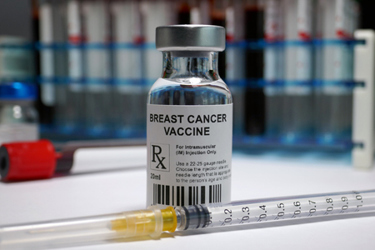
A few times in life you hear something that precipitates a pause – a reality recalibration. Like the one experienced by Amit Kumar, chairman and CEO, Anixa Biosciences.
He had emerged from an early retirement devoted to philanthropy to take the reins at Anixa. Combing through research reports for assets to develop, he came across papers published by a scientific team at Cleveland Clinic, led by immunologist Vincent Tuohy.
“Am I missing something?” Kumar thought. “This research could be big in the world of cancer. Am I fooling myself?”

He read the papers and confirmed what Kumar was thinking:
“This could be one of the biggest products in the history of medicine, a technology enabling a prophylactic vaccine for hundreds of millions of women to prevent breast cancer, or perhaps eliminate breast cancer as a disease, like we've done for polio and many others in the infectious disease world.”
Kumar and Shepard flew to Cleveland Clinic to speak to the scientists involved.
Tuohy had approached the vaccine from an immunology, as opposed to an oncology, perspective. Kumar suggests those nuances in approach may be why others did not see what he did.
After discussions, Anixa worked out a partnership with the Cleveland Clinic to take the vaccine program forward.
And as we learned earlier, that was forward into an all-outsourced strategy – managed by a grand total of four full time employees at Anixa, advising scientists, physicians and others at Cleveland Clinic.
Is Anixa in fact the right vessel to steer this potentially breathtaking vaccine?
The company was founded in the 1980s – as an electronics company. Over the decades, it pursued different business opportunities; none succeeded.
In 2017, a friend of Kumar’s on the Anixa board asked him to take the reins. Kumar agreed to “reposition Anixa as a biotech company.”
Since then, the biotech has developed several assets. Two are in clinical trials, including one in ovarian cancer that is extending the lives of terminally ill patients. The development model is always to fully utilize external partners.
My initial interest in Anixa was an announcement it had partnered with Cytovance as its CDMO for their (yet unnamed) breast cancer vaccine.
Vaccines Via Outsourcing
Anixa is preparing for Phase 2 manufacturing. We learned earlier the company selected its CDMO based on a few fundamental factors:
reliable production of high-quality material – always the main component of CDMO selection, this is "the belief in a partner’s capabilities, production and operational prowess above and beyond other CDMO candidates.
technical specificity – for Anixa that specific expertise is in microbial manufacturing of recombinant proteins. To provide any chance of success for this breast-cancer vaccine, Anixa required specific expertise “in microbial manufacturing of recombinant proteins. (The science revolves around a small, recombinant protein manufactured in a bacterial host in E. Coli.)
judgement on continuity – Anixa heads to Phase 2 with a keen eye towards Phase 3 and commercial; Kumar prefers not to have to change CDMOs.
I ask Kumar who helped him select the manufacturing partner based on the criteria above.
He mentions Dr. Pamela Garzon, a professional with decades of prior experience in pharmaceutical science at Pfizer and other large companies.
“She led the effort in evaluating the potential CDMOs. She had a team of outside consultants, as well as financial representation, involved in making a final decision,” says Kumar.
I ask him what he tell me about the consultant selection; there certainly are a lot out there to select from.
“Similar to our CDMO selection," he replies, "we work with those consultants known for high-quality work and experience. Our consultants often come from among people that we've had relationships with during our careers."
Back to his CDMO selection, Kumar says it's been “a really good experience with Cytovance on this project.”
“We have other projects we would move forward with them, and that's because "this is also about personal and professional relationships.”
An Accountable Scale Up
The current need for Anixa is “scaling manufacturing,” for Phase 2 trial material. However, Kumar knows a progression to Phase 3 and beyond will require substantially more material to meet his expectations that this vaccine could be administered to women around the world.
To do that scaling, Anixa receives key assistance with the production of the protein, of which “there are certain aspects,” he says. For example, once it is produced, “it has to fold in the right way.”
“And once it's appropriately isolated,” Kumar continues, we need a fair amount of analytical work at the CDMO to ensure we have what we think we have, without impurities, fragments, dimers, or trimers.”
“The three challenges are production, analysis, and then that scaling,” Kumar breezily explains a workload that is anything but easy.
Material produced at the CDMO will be sent to a separate partner for formulating and fill-finish into small vials ready for patient administration.
Like all development programs, to realize the full potential of the medicine ... financial backing is essential, and says Kumar, that backing requires strong financial accounting of how the money will be and is spent.
This means Anixa's CFO also plays a role in CDMO alignment.
“We're a public company,” Kumar reminds me. “We file financial statements in our quarterly and annual reports. You must account for all aspects and understand how to finance your efforts.”
In fact, the first iteration of Anixa performed an IPO in the 1980s, but the company was subsequently de-listed from NASDAQ.
When Kumar got involved in 2017, he “put Anixa’s house in order," and brought the company back to the public exchange.
“I personally invested over two and a half million dollars to buy stock in this company to help finance us,” he tells me.
“I'm expecting a return on that investment eventually, as well as all the expectations of what we can do for so many people worldwide. I hope this is successful on all fronts.”
If it is, it will give us pause to consider how the efforts of our industry's researchers and engineers, business and finance leaders, and our system of outsourcing, can change our realities for the better.