
Outsourcing Everything Is The Biotech Blueprint

By Louis Garguilo, Chief Editor, Outsourced Pharma

“My business model when I took over in 2017 was to outsource everything.”
That’s as clear as it gets from a biotech CEO.
Amit Kumar cuts to the chase during our conversation centered on the newly announced relationship between his company, Anixa Biosciences, and Cytovance Biologics, a U.S.-based CDMO.
Kumar, also chairman, delights in describing Anixa’s development and manufacturing model based on zero internal labs, a skeleton (but potent) scientific staff, and no plans of ever owning any form of infrastructure.
“We partner our R&D and clinical studies. We’ve always known when the time came, we would identify partners to manufacture.”
That time has arrived.
The Man Behind The Method
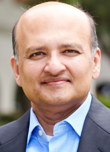
He’s been a founder and executive in public and private enterprises, and served on the board of the American Cancer Society (ACS) from 2017-2023. While at ACS, he was a founder of the venture capital arm at BrightEdge.
Kumar received an AB in Chemistry from Occidental College, went on to Stanford University and Caltech – where he received his Ph.D – and did a post-doctoral fellowship at Harvard.
He tells me he "emerged from venture capital" to join the biotech industry. At an early stop, he says, “I was the CEO at a publicly traded biotech that grew to 180 employees. We were doing all the work, which was incredibly expensive.”
“I knew from that experience this time at Anixa I would proceed very differently.”
Maintaining labs and scale-up manufacturing facilities soaks up too much time and way too many financial resources. “Why reinvent the wheel?” he asks. Outsourcing is the model altogether better at allowing more biotechs to bring more drug programs forward; CROs and CDMOs are already set up to steer you clear of the financing burden created by infrastructure.
“At Anixa, we think a lot like a venture capital firm,” Kumar explains.
“The business of biotech is high risk. Reducing the financial component is accomplished by maintaining a small headcount that carefully administers capital and resource allocation, and proactively manages external partners.”
Unfortunately, too few biotechs follow this thinking to the extent that brings optimal benefits.
Kumar is convinced outsourcing transactions help you burn less cash. “You can structure deals correctly,” he says. But be thoughtful: “For R&D, some academic institutions make partnering difficult; look for those that are more amenable. A partnering approach is tremendously valuable for the present, but also our subsequent relationships.”
Outsourcing does take work. Essential is ensuring partners share your vision and strategy, and managing your ongoing relationship at a detailed level – including the CEO when necessary.
“The advice I would give is this business strategy should be utilized optimally, because biotechs subsist on relatively large amounts of cash to survive,” he says.
“I have sat on both the venture capital and investor side of the table, and the biotech side. Frankly, the biggest reason start-ups or even advanced biotechs fail is an inability to properly finance themselves.”
“It's a shame,” he continues. “Products they're developing could be game-changing for sick people. There are multiple examples where I thought programs with merit weren't developed because of capital issues.”
“I have classmates – CEOs at other companies that have built out infrastructure. When circumstances become difficult in capital markets, they have to raise capital under immense pressures, often with ‘toxic’ terms, if they can raise capital at all.
I’m not admonishing anyone, but you can structure outsourcing transactions so you burn less cash, better manage risk, and provide investors with confidence in your strategy.”
Time To Select A CDMO
Anixa is preparing for Phase 2 manufacturing of its breast cancer vaccine – a breast cancer treatment and prevention vaccine. It has the potential to be revolutionary, and yes, we will go into further detail in a follow-on editorial.
For now, I ask Kumar what are the main elements for selecting one CDMO among others?
Technical specificity matters, he says. “For us, the first factor is expertise in microbial manufacturing of recombinant proteins. There aren’t that many that can do microbial cells.”
That narrowing is instructive. It indicates that capability is still very much segmented in our industry, and that segmentation drives CDMO selection decisions.
Kumar’s second factor is perceived execution quality. “This is our belief in an organization’s technical capabilities, meaning we've validated their production and operational capabilities are superior to the other organizations we looked at.”
Third on the criteria list is a judgement on continuity. Anixa heads to Phase 2 thinking of Phase 3 and commercial. “We prefer not to switch vendors,” he says. “We felt Cytovance could allow us to achieve that.”
Kumar says CDMO pricing "is always surprising” – but then the savvy investor in him shies away from the subject. “The main issue for us is always reliable production of good quality material.”
“If you go into a clinical trial with questionable material, and a failure occurs, you suspect it was the material itself. That puts you in a difficult predicament.”
The way he sees it, perceived “savings” at the CDMO level can introduce confounding variables at the clinical level. Those variables can cost you millions of dollars, or even destroy the chances of an asset advancing.
That being said, pricing isn’t ignored; it should be determined “reasonable for the complexity of the manufacturing process.”
More Than One Partner
The Cytovance relationship is an “all of the above” arrangement: development and scaling, analytical work, production. The modern (and typical) CDMO integrated service stack.
At the same time, Kumar clarifies that Anixa orchestrates a multi-partner ecosystem:
- Cytovance: drug substance
- Curia: formulation and fill-finish
- Cleveland Clinic: R&D and clinical execution
This, he says, is less a layer of complexity, and more an enlightened design for the efficient handling of his all-outsourced development and supply chain. Each relationship relies on flexible contracting, detailed statements of work, close coordination, and frequent and various levels of meetings.
Considering all that is required to achieve an all-outsourced model, Kumar says trust is still foundational. “This is about nurturing relationships to create this fantastic process.”
-------------
In part two with Amit Kumar, chairman and CEO, Anixa Biosciences, we’ll go into further detail on how a biotech gets started on a vaccine that may prevent breast cancer.