
Discovery Research
FROM THE EDITOR
-
 Does Biotech Need More Government Funding — Or A New Business Model?
Should government financing appreciably recede – whether through policy shifts, budget pressures, or ideological bent – what would happen to the biotech business model? To ascertain such a question, first we must look at the fundamentals of the existing model, and then understand investors (and service providers) better.

It sets off a real tension – ideological, economic, even personal. But what would happen if the U.S. government cut direct financial support for “biotechnology research,” leaving it entirely to investors, private and public markets, and bigger pharma? "Our industry’s mind-meld says with no government largesse our biotech industry collapses," writes Chief Editor Louis Garguilo. It's an "outlandish hypothetical," but he asks for a few minutes to go through this. And he has help in making his case.
GeoVax CEO David Dodd sings the praises and is grateful for the program-enabling relationships he has in Europe. At the same time, he harbors lingering disappointment. From the outset of its formation, the biotech has desired to work with U.S.-based CDMOs. But he says he will not give up. “One way or the other,” Dodd says, “GeoVax will have U.S.-based manufacturing.”
“I assist C-suite executives to transfer quality from a painful cost center to a competitive asset." It's the type of bold statement that draws one's attention. Chief Editor Louis Garguilo asked David Grote on what his assertion means materially – and how that’s applied to working with CDMOs. Here's their discussion that focuses on a transformation that moves executives from regarding quality as ‘overhead’ to recognizing quality as “an operational element for business advantage.”
The Jones Act punishes U.S. pharmaceutical manufacturing. It may have taken a modern-day war, one much involved with the free navigation of commercial shipping, but after more than 100 years navigating a policy of protectionism – and fear of competition – are we are again waiving the Jones Act (for 60 days). Chief Editor Louis Garguilo says let’s not temporarily waive it. Sink the Jones Act forever.
ARTICLES
-
 Mammalian Cell Line Development
Explores how modern cell line engineering boosts speed, stability, and scalability across biologics, with practical insights to cut risk and improve readiness for downstream development.
-
 Protein Degraders: From Discovery To Development
Leverage integrated platforms for targeted protein degradation and molecular glue solutions, from ligand identification to IND-enabling studies. Advanced screening and structural biology support accelerate discovery.
SERVICES AND PRODUCTS

iPSC generation is a complex process of reprogramming adult somatic cells into a pluripotent, embryonic stem cell-like stage.
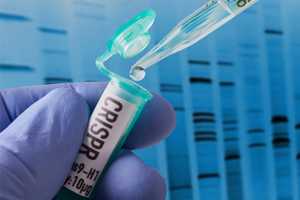
A quick overview of this industry-changing technology as well as the newer Cas9 variants that expand its use.
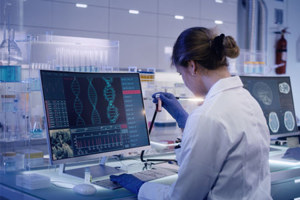
With our proprietary TARGATT™ technology for site-specific integration of large DNA fragments, we’ve developed a series of TARGATT™ “master” cell lines, including engineered CHO.
Accelerate cell line development for library creation and protein expression with efficient TARGATT™ large knock-in technology.
Build cell-based models of disease and accelerate therapeutic development with TARGATT™ large knock-in technology in iPSCs.
SUPPLIER PROFILES
-
UPM Pharmaceuticals, Inc.
UPM Pharmaceuticals, Inc. is a Baltimore-based, independent drug development and contract manufacturer serving the pharmaceutical and biotechnology industries.
-
Aptuit
Aptuit is a pharmaceutical services company that delivers early to mid-phase drug development solutions by applying scientific excellence, outstanding service and a team of some of the foremost scientific professionals in the industry.
-
Aptuit, Inc. - drug development programs, pharmaceutical service Aptuit is a pharmaceutical service company that conducts research, development and manufacturing on a contract basis for both large and small innovators.
OUTSOURCED PHARMA NEWS
-
Symbiosis Expands Commercial Capabilities With Addition Of New Stability Chamber4/1/2026
Symbiosis Pharmaceutical Services (Symbiosis), a Contract Development and Manufacturing Organisation (CDMO) specialising in the sterile GMP manufacturer of injectable drug products, has expanded its Quality Control (QC) laboratory with the installation of a new 30°C stability chamber.
-
ROIS CDMO Closes On The Acquisition Of US Injectable Manufacturing Facility4/1/2026
ROIS, the CDMO arm of ROVI and a leader in injectable manufacturing, today announces closing the acquisition of a state-of-the-art injectable drug product manufacturing and packaging site in Phoenix, Arizona (USA) from Bristol Myers Squibb.
-
Anixa Biosciences Advances Breast Cancer Vaccine Toward Phase 2 After Positive Phase 1 Results; Cytovance Selected For cGMP Manufacturing4/1/2026
Anixa Biosciences, Inc. ("Anixa" or the "Company") (NASDAQ: ANIX), a biotechnology company focused on the treatment and prevention of cancer, today announced that it has entered into a development and manufacturing agreement with Cytovance Biologics (www.cytovance.com), a leading full-service contract development and manufacturing organization ("CDMO") specializing in mammalian and microbially expressed biologics, to produce cGMP clinical materials for its planned Phase 2 clinical trial of its breast cancer vaccine.
-
Merck Completes Acquisition Of JSR Life Sciences' Chromatography Business, Expanding Protein A Capabilities And Downstream Portfolio4/1/2026
Merck, a leading science and technology company, today announced that it has successfully closed the acquisition of the chromatography business of JSR Life Sciences.
-
Samsung Biologics Completes Acquisition Of GSK's Manufacturing Facility In Rockville, Maryland3/31/2026
Samsung Biologics (KRX: 207940.KS), a leading contract development and manufacturing organization (CDMO), today announced the completion of its acquisition of a manufacturing facility in Rockville, Maryland from GSK, establishing the company's first manufacturing presence in the United States.
ABOUT DRUG DISCOVERY RESESARCH
Outsourcing of drug discovery research helps pharmaceutical and biopharmaceutical companies find targets that cause or lead to specific disease and the compounds that might prove effective in treating the disease. Chemical or biologic compounds are screened in the laboratory using specific assays and are tested against these targets to find leading drug candidates for further development. Many scientific approaches are now used to determine targets, typically receptors or enzymes, and obtain the lead compounds. These include the use of genomic and proteomic technology, synthetic chemistry, recombinant DNA (rDNA) technology, laboratory automation, and bioinformatics.
Drug discovery research is often broken into 4 stages: target identification & validation, lead identification, lead optimization, and candidate selection. Discovery research services offered by Contract Research Organizations (CRO) include molecular imaging, In Vitro Assays, disease models, transgenic creation/phenotype, genomic analysis, and population genetics in the target ID & validation stage. Lead identification services include HTS & secondary assays, assay development, protein expression systems, expression construct, in-silico screening, crystallography, computational modeling, and medicinal chemistry.
Testing during lead optimization includes efficacy models, discovery toxicity and pharmacology screening, DMPK, molecular & cellular analysis, bio analysis, transgenic studies, informatics, protein production & purification, hybridoma generation, rational drug design, and consulting services. Finally, candidate selection is accomplished using pathology and histopathology, safety models, formulation analysis, and process chemistry & scale-up.