
Remember Why You Are Outsourcing

By Louis Garguilo, Chief Editor, Outsourced Pharma
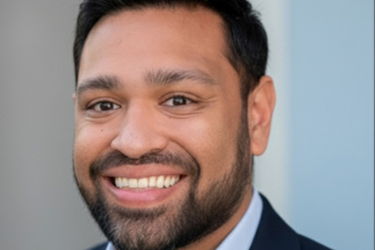
AstraZeneca went all in on creating a cell-therapy franchise just over a year ago; it has made strategic acquisitions of Neogene Therapeutics, Gracell Biotechnologies, and EsoBiotec. It invested $300 million in a dedicated manufacturing facility in Rockville, Maryland.
In May of 2025 it added a unique employee.
Samir Panjwani joined AZ as Associate Director, Supplier Relationship Management – Cell Therapy, after a career that includes positions at Beckman Coulter, Cytiva ... and four years at Orangetheory Fitness.
Orangetheory Fitness?
He helped build and operate six fitness franchises, an experience, he says, that was another way to gain exposure to scaling a service business, leading teams, building customer trust, and turning an operating model into measurable outcomes.
“I’ve been a builder throughout my career,” Panjwani says. “The common thread is always health,” and the common question he’s always kept in mind is:
Why are we in this industry?
“The answer for us should be to make a positive impact on people's health. We want to leave our mark.”
This can work in reverse; the biopharma industry has left a mark on Panjwani’s life. He is, in fact, reliant on a biologic.
“If this biologic is late because of a manufacturing or a supply-chain issue,” he says, “that greatly impacts the quality of my life.”
Today Panjwani works on AZ's supply chain to help propel it through the CGT arena, although for our discussion, he clarifies he does not speak on behalf of AZ.
The CDMO Selection Shift
One component that renders Panjwani "unique' is a “side project” we'll detail subsequently – an AI-featured CDMO search engine.
Panjwani draws from “bilateral experiences” supporting CDMO customers, and sponsor-side supplier-relationship management to shape his approach to development and manufacturing outsourcing.
Overall, he says, our industry is evolving the CDMO selection process, specifically in how sponsors and CDMOs think about commercial alignment.
“We're thinking more about our best practices and innovation; we want to bring external relationships forward.” For sponsors, this includes revisiting risk-sharing frameworks and other outside-the-box approaches with CDMOs.
A more genuine interest has arisen in those frameworks, and commercial-relationship models where sponsors and CDMOs align incentives around technical, operational, and process outcomes – and ultimate mutual financial outcomes.
“The CDMOs willing to have that conversation today are those seriously looking to build more strategic sponsor relationships,” he says.
“One reason I moved to the sponsor side [after years at Cytiva] is I became intrigued with how even organizations with deep internal capabilities continue to rely on CDMO networks, especially in cell and gene therapy.”
Panjwani was an early member of AZ’s cell-therapy external manufacturing side. He brought this mindset: “The best outsourcing relationships are mutually beneficial or they do not hold up over time.”
CDMOs receptive to different models may already have long-standing sponsor relationships. There is trust, there has been mutual success.
An example, suggesting to a familiar CDMO:
"Attain a certain plasmid yield, and we'll pay above certain price levels, but in the initial stages we need the cost as low as possible so we can get the recipe right."
Challenges remain with such offers, but these discussions have taken place at various CDMOs willing to "at least bring this to the table and chop it up to see what it looks like if we go down that route.”
“I believe we will continue to push models, and see what's possible,” Panjwani adds.
Changing subjects, he then interjects that no matter the outsourcing model, “I always come back to the regulatory-quality side of things as a primary filter in CDMO and partner selection.”
And that brings him back to keeping in mind we are making medicines for reliant patients.
"Today it is more about, ‘Do they have a clean FDA or EMA record?' and less timelines.
“When I was at Cytiva, we were coming out of COVID," says Panjwani. "The challenges for CDMOs and sponsors were those timelines and capacities. Everybody focused on supply-chain challenges above all else.”
In 2026, the industry is pushing to ensure the number one filter is quality and a clean regulatory record. “I think that shift is noteworthy,” he says.
How About Corporate Culture?
A nebulous statement often repeated: We want a CDMO that matches our culture.
What does Panjwani think?
“When you work through your decision matrix to select CDMOs, you may not talk about culture specifically, but it’s there,” he replies.
There’s “an archetype of a CDMO that is the right fit at the right time for a particular project." Panjwani advocates engaging CDMOs early. At times, before there’s a tangible project, to assess – or even help create – that archetype.
Flexibility might turn out essential, or perhaps other “softer filters” to assess before talking about capabilities, capacity, and timelines.
“The more time you have to understanding a potential partner, and how they operate outside of whatever has been pitched to you, the better your selection process gets,” he explains.
Fine on paper, as they say. In practice? I would expect exasperated CDMOs to protest, 'Hey, we've been talking for a year now. What do we have to do for you to give us anything?'
Definitely,” Panjwani says, “and you don’t keep too many in the hopper for too long like that. You must be honest, not string anyone along.”
CDMOs are wise (although BD can get a bit frustrated). They understand project cycles don’t happen at a snap of a finger; some may progress to "start" quickly and some may be priorities.
But not always, and as per above, Panjwani wants early engagement.
"So I'll suggest, ‘Let’s meet at the conference every year,’ or ‘I’m in town; let’s have a cup of coffee and talk about where things stand.’”
CDMOs should accept those invitations, but there are limits. "Understandably, the commercial side is trying to make a sale," he says. “It’s important for sponsors to be open about where they are in the process.”
The maturing of the sponsor-provider relationship is in progress. At its center: Remembering why we are in this business.