
In Palm Beach The Focus Is On Biotech (Not President Trump)

By Louis Garguilo, Chief Editor, Outsourced Pharma
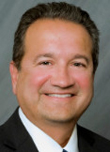
“When I came to Florida,” James Sapirstein says, “I was leaving New Jersey because of tax reasons.” That was 2018, “well before anybody knew anything about COVID.”
Or, we might add, about an incredible investment boom.
Timing is everything, they say. Sapirstein’s relocation placed him ahead of a broadening and intensifying migration trend – including he believes, the establishment of a new biotechnology settlement.
“What's happened since I moved,” he explained, “you can magnify by a thousand.” Executives, their companies, and investors have sped to Florida to find a new base of operations.
This is certainly not news to readers – Miami alone seems perennially in the headlines.
The reasons are straightforward. “Economics drives investors,” Sapirstein says. And when investors move, industries tend to follow, and that includes an industry such as biotech.
“We are bringing the entire ecosystem together from across the state,” he says, and adds the Collective’s format is “intentionally different” from traditional industry organizations.
“We did a cocktail hour the other night,” he says. “Our targeted objective was to focus on intersecting current and prospective biotech investors, bankers, C-level professionals, and academia.”
Any CDMOs? I ask on behalf of Outsourced Pharma readers.
“Not quite at this time. We are courting biotech professionals and investor decision-makers,” he explains, although we’ll learn below those external partners are indeed part of the plan.
Money, Money, Money
There is a crazy irony here.
In earlier editorial, Sapirstein helped us go through a mini-dissertation based on a provocation: What if the U.S. government stopped funding biotech?
Sapirstein, a savvy investor and former biopharma executive, argued for the side of the 99% who believe it would bring disaster to our biotech industry. China would eat our lunch, for one thing.
I posited that would not necessarily be the case; we should seriously reconsider our government dependency, and being judged by how much money our governments hand out.
And here we are, now talking about Sapirstein’s Collective that seems to argue for the idea other investors could fill in for the government.
“The banks and others have moved here,” he says excitedly, and then proceeds to rattle them off:
“Larger players are establishing a presence. JPMorgan Chase – their whole private and public life science investment fund is here in West Palm Beach. Goldman Sachs has put their life sciences division in Brickell in Miami. Hedge fund giant Citadel has relocated major operations to the region as well.
“I could go on and on,” he says. The influx of these financial institutions is a key piece of his biotech-cluster-creating challenge.
Pockets Of Clusters
Florida, Sapirstein avers, already hosts a Miami-area biotech concentration and “multiple other clusters.” Again, not news, but a new take on how it can all be put together.
Manufacturing is an important ingredient. “It's a very diverse state,” he says, “You do have high quality manufacturers down here.”
All this activity, though, is scattered, as in disconnected across the state.
“There’s one bio cluster near Tampa and Sarasota,” he says. "Another sits around the University of Florida in Gainesville. There’s over a hundred companies that have been formed out of the university.”
Jupiter, for example, is home to significant research infrastructure. “When Jeb Bush was governor,” Sapirstein says, “he convinced Scripps Institute to move part of their division from La Jolla to Jupiter. The Max Planck Institute followed. In this case, they're right next to each other."
Yet he finds it remarkable – and a great opportunity – that much of that capacity sits unused. “There’s over 120,000 square feet of lab space with equipment that's not being utilized.”
He’s got the numbers:
Adding the primary research-focused buildings gives roughly 58,000 (FAU Stiles-Nicholson, lab-heavy) + ~350,000 to 364,000 (Scripps) + ~58,000 lab sq ft within ~100,000 to 105,000 (Max Planck) = approximately 466,000–480,000 square feet of building space heavily oriented toward labs/research.
And his finger on the FLA-bio pulse.
Meanwhile, he says, “hundreds of smaller companies are emerging across Palm Beach County and nearby cities.”
“Where I live in Boca Raton and West Palm Beach, you have over 200 small companies.”
The overall opportunity lies in connecting these pieces:
Academia;
BiopharmaStartups;
Investors (Investors, Investors); and yes
CDMOs
“Someone's got to put it all together to make it work,” he says, and that’s what the Miami Biotech Collective aims to do.
“We started last year in June with 20 people,” Sapirstein said. “In less than nine months, we had over 650 paying members already.”
This growth, though, "is intentionally selective.”
“Our next program is invitation only. We’re allowing 80 people,” he tells me, then adds with a laugh, “If they can't get in, they think it's real special.” The goal is to bring in those with solid, serious intent.
I think that means those with big bucks and open to biotech-investing risks.
Those with the drive to match his for building out infrastructure in a business-friendly state offering innovators comparative advantages over biotechs in other parts of the U.S. – and the world.
And despite his response above, CDMOs are part of the long-term vision.
“We do want to partner with CDMOs,” he says. One already involved is Akron Bio, a cell-therapy manufacturing specialist with operations in Florida. “They’re local,” Sapirstein says. “and we’ve already been in talks.”
Again harking back to our earlier discussions, we noted in our comparison between biotech growth in China and the U.S., that China’s industry started with CDMOs and manufacturing.
And Sapirstrein's longer term vision has the Collective exploring partnerships on nearby shores.
Miami’s position as a gateway to Latin America may prove particularly valuable, he thinks. “We’re exploring partnerships in Latin America. There’s a lot of high-quality manufacturing down there.”
For Sapirstein, it's a different time and era. Today, where the investors go, biotech follows, and the CDMOs complete the picture.
He ends by saying he's not trying to replicate a Boston, a San Diego, or any other biotech cluster.
He believes Florida will evolve into something different: A statewide-distributed, finance-driven biotech ecosystem. Once again, all sunglasses are looking to the Sunshine State.