
2025 Tariffs Barely Impact Europe's API Supply Chains

By Louis Garguilo, Chief Editor, Outsourced Pharma
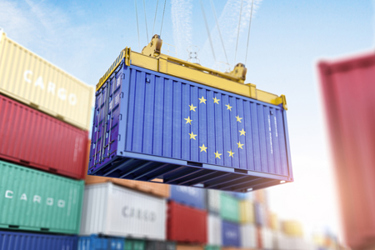
When the U.S. administration began waving the specter of tariffs on drug substances and products entering the U.S. earlier this year, the entire biopharma world held its breath. European countries, as much as even China or India, felt the lack of oxygen.
Would global sponsors flee European CDMOs to relocate their active pharmaceutical ingredient (API) production to contractors in the U.S.?
The specific tariff that ended up being “negotiated” and was widely publicized was the 15% on product from Europe, hitting API and other materials. (Globally, China imports remain a moving tariff target, and India as well is part of a still gyrating geopolitical tariff play.)
But a review of manufacturing contracts, press releases, public and private conversations has uncovered little discernible evidence of a strategic or contract-level exodus from Europe-based CDMOs to those in the U.S. because of tariffs.
Now let's be clear. We are not overlooking the massive drug manufacturing investments that have been announced (and in many cases are underway) in the U.S. by Big Pharma – and global CDMOs – since the Trump tariffs.
At this writing, we are at an estimated cumulative plus-$350 Billion. This has to tell us the future will see (much) more drug manufacturing overall in the U.S.
Nonetheless, as we finish up 2025, tariffs on Europe appear to feel far less like a heavy blanket, and more like a permeable net with limited effect on API outsourcing or supply chains.
Why Sponsors Are Staying Put
First off, transferring API production from one site to another is never a mundane and rarely a desirable undertaking. Readers know this.
The effort and risks involved elevate when moving to another country, for example when leaving a relationship in Europe to come to the U.S.
“Forced” project relocations burden sponors and CDMOs with managing tech transfers, and particulars such as analytical method bridging, process qualifications, regulatory filings (e.g., CMC amendments), revalidations, new quality integrations … all while attempting to maintain supply continuity.
Sure, we’ve gotten better at tech transfers of all kinds. But risks are invariably inherent in such activities, and production time slots are hard to negotiate.
There are expenses involved with transfers that in this case need to be initially weighed against a 15% surcharge.
Add that supply contracts can carry various obligations, exclusivities, change-control clauses, minimum volume obligations, penalty provisions, and quality/regulatory performance expectations ... and thus no drug company wants to move from one manufacturer to another for anything but the most critical reasons.
Does a 15% change in exporting product rise to that level of criticality?
Most importantly: How much will manufacturing cost above the current price of production if relocating in the U.S.?
II'm not saying it will cost more; I'm just saying that's the point here.
And who knows? Tariffs may change again. Or their real (or perceived) impacts may dissolve eventually on some relative basis.
To be sure (and not to be discounted), emerging biotechs and pharma with new outsourcing requirements may look to select a new CDMO in the U.S. first.
But as we head into 2026, we see little or no change in sponsor behavior where relationships and contracts are already established and underway.
What Has Happened?
The reconsidered strategy most described to date is where sponsors are leaning toward adding U.S. capacity alongside their existing European/Asian suppliers.
As mentioned above, there's a flurry of U.S. investment by deep-pocketed Big Pharma to mitigate tariff risk (or as some executives have dared say, mitigate Trump risk), and both U.S.-based and global CDMOs continue to ramp up capacity and capabilities here.
Much of this build out can be directly attributed to President Trump’s get-out-of-jail card:
Any manufacturer who is already manufacturing, has “broken ground,” or is already under construction in the U.S. can escape certain tariff applications.
By our count, through the end of September timeframe, over two dozen pharma companies have announced credible expansion or new production plans.
There are certainly more to come.
A final element, perhaps impactful as well. President Trump signed an executive order to establish a Strategic API Reserve (SAPIR) targeting critical drug supplies, with preferential treatment for domestic API production.
Give him credit, I suppose. He knows the importance of APIs in the supply chain.
Biotechs Have Fewer Options
The tariff narrative is bifurcated.
Big Pharma (and Big CDMO), with more to lose from tariffs, have the means to build facilities in the U.S., and ways to negotiate with the president.
Emerging nor many established biotechs have either.
If biotechs are importing drug materials and product, they may feel they have little recourse other than to stay put and form the best deals and relationships they can with current providers.
Their financial calculations indicate it’s in their best interests despite tariffs to stay offshore, if that is where they find themselves.
If nothing else, time is money, and timing forms the knife-edge of innovation moving to the clinic and beyond. Diffusing focus to change suppliers, and the risks involved, may not add up.
Having said that, we know that (with exceptions) U.S.-biotechs prefer to select stateside CDMOs – if viable options are available here.
And that raises a fine point we’ve only hinted at above.
The U.S. has gained increasing CDMO facility builds and investments over recent years (check out North Carolina, for example).
However, we need to continue to monitor whether there will be enough capacity should a larger transition from offshore outsourcing to domestic CDMOs actually occur.
Folks I’ve talked to provide a decidedly nuanced reply. It could depend, they say, on what capabilities and capacities drug sponsors will need.
Finally here, and circling back, let's again state that the price of development and manufacturing services, and considerations of COGs, will always be a concern.
Trump believes that’s what this is all about – that the cost of tariffs will drive new behaviors.
We’ll have to see how far that goes for our outsourcing industry.