
How Outsourcing Meets Precision: A Formula For CDMO Interactions

By Louis Garguilo, Chief Editor, Outsourced Pharma
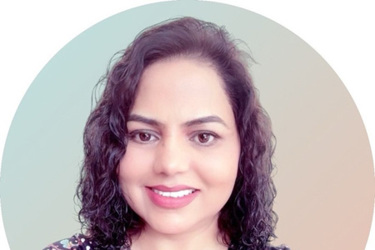
Seema Singh represents today’s global regulatory leadership in Japan’s biopharmaceutical sector.
She holds a Master’s in Instrumentation (Analytical Chemistry) from Jiwaji University in India, and is a certified Project Management Professional (PMP) from the Project Management Institute (PMI ).
Her career spans the most respected Japan-based pharmaceutical organizations, including Eisai, Astellas, CSL Behring Japan, and Mitsubishi Tanabe Pharma.
Beyond those roles, Singh also founded a Tokyo-based consultancy focused on medical technology, software as a medical device (SaMD), licensing, and regulatory solutions.
Today, she plays a pivotal role in CMC Regulatory Affairs at Daiichi Sankyo, where she leads the development of regulatory strategies that, she tells me, “integrate scientific rigor, compliance excellence, and global market readiness.”
Singh’s experience across biologics and drug product lifecycles – from development through commercialization – helps her articulate the realities of how Japanese Pharma engage CDMOs, and what these “high-performing outsourcing partnerships” require.
As I often note from my time leading CDMO business operations in Japan for a U.S.-based organization:
“If a CDMO can satisfy the expectations of a Japanese organization, it can work with any sponsor in the world.”
Singh provides powerful insights into this structured, trust-based but quality-driven approach defining Japan’s outsourcing culture, and provides readers the ideal blueprint for working with CDMOs.
Communication As Prime Directive
When asked for Singh’s first piece of advice to biotechs new to outsourcing, Singh doesn’t skip a beat.
“Communication is the key.” She could wax poetically about “CMC technicalities,” but success or failure, “hinges on human connection and clarity.”
This is not a “soft skill”; communication discipline must be embedded contractually and operationally, and mutually applied between sponsor and external collaborator.
“At the time of contracting with a CDMO, sponsors should annex clear conditions for frequent updates, escalation paths, and transparency when risks or challenges appear during scale-up,” says Singh.
“All deviations must be discussed openly – and often exhaustively – with the sponsor’s CMC professionals and the parnter’s SMEs.” This transparency builds a communication trust fund.
Japanese teams specifically value structured communication channels – not ad hoc exchanges actually sought out in some Western-style communication ethos.
Scheduled meetings are required, and should be attended by CMC and SMEs from both sides. That participation starts during technology transfer.
“Sometimes when companies in Japan select new CDMOs, responsiveness becomes an immediate issue,” Singh says.
“If communication gaps appear, the Japanese sponsor will set up a call to explain explicitly the challenges being faced, and what must be improved immediately.”
Her advice for CDMOs?
Understand that customers expect responsiveness not as a courtesy, but as a contractual performance metric.
Inside An Outsourcing Culture
“We tend to be conservative and compliance-driven,” says Singh of the Japanese outsourcing attitude.
“We expect highly detailed documentation, and sometimes I’ll admit, we can over-validate processes – especially to meet PMDA regulatory expectations, alongside those of the FDA and EMA.”
Where a Western company might resist the need for such redundancies, a Japanese sponsor sees these as assurance. Process reliability and high-quality documentation aren’t simply regulatory obligations; they’re manifestations of corporate responsibility – ultimately to patients.
The Longer, The Better
Perhaps this is known to most readers: Long-term, success-based relationships have been a hallmark of Japanese business.
“The Japanese still prefer to build relationships over years rather than switch CDMOs, for example for cost savings,” Singh says. If, that is, the external partner is serving as "an equally performing extension of your own manufacturing and quality systems."
Interestingly, and this time contrary to some assumptions, Singh says today Japanese companies do not necessarily prefer Japan-based CDMOs (for language, cultural, or quality reasons).
“In my experience, no,” she said when challenged on this. “Most all Japanese companies willingly work with overseas CDMOs for clinical and commercial supply.”
Three main reasons:
- Manufacturing costs are frequently lower outside Japan
- Domestic capacity, particularly for biologics, is limited
- Global experience with FDA and EMA expectations is essential for multinational filings
“Language and cultural familiarity help,” Singh adds, “but they are secondary. Good communication can be managed, if needed, through bilingual project managers or liaisons. The focus is on frequent, proactive, and transparent updates.”
Regarding those uupdates, from a CMC and regulatory perspective, Singh emphasizes the importance of structural traceability.
“Japanese pharma expect detailed but also narrative-style documentation,” she says.
“Tech transfer, for example, must capture the full process knowledge – equipment, critical parameters, operator actions and training – not just summary data.”
During CTD (Common Technical Document) preparation, it’s critical to maintain complete traceability to source documents, e.g., executed master batch records and logbooks.
Japanese sponsors expect rigorous change control and deviation documentation. “Informal or undocumented changes cause tension,” Singh says. “What might seem like a minor adjustment in another culture can be viewed as a serious procedural breach in Japan.”
Three Practices for Success
Perhaps we can distill Singh’s experience into three essential practices for any biopharma organization relying on global outsourcing of development and manufacturing:
- Prioritize frequent, clear, and structured communication
Communication is an institutionalized activity. It is embedded in contracting and project plans, and as importantly, daily worker behavior at both the sponsor and CDMO. - Establish specific expectations early on
Define deliverables, timelines, and decision-pathways before work begins. Ensure both sides understand, agree to, and can live up to those expectations. - Treat trustworthy CDMOs as partners, not vendors
If you view your CDMO as a mere service or material provider, you’ll never unlock their – nor your – full potential. Mutual respect and openness create resilience, trust, and long-term success.
Singh’s career – an India-trained scientist thriving in Japan’s most exacting biopharma environment – mirrors in many ways the globalization of our industry.
She reflects what the highest expectations should be for all CDMOs, whether your organization is an exacting Japan Pharma, or a start-up biotech in the U.S.
Yes, there some downsides to the management apparatus of some organizations in Japan, such as slower decision-making, or a loss of productivity to these same gods of detail and precision. Even the good can be overdone.
But whether in Tokyo or Tallahassee, elevated expectations and exacting execution can facilitate improved outsourcing outcomes.