
What Goes Into Restarting A Shelved Orphan Drug Candidate?
A conversation between Elizabeth White of the Orphan Therapeutics Accelerator and Life Science Connect's Jon O'Connell

No advanced therapy developer feels good about abandoning a clinical-phase orphan drug candidate that they know has a real chance at approval.
Those medicines may not have to languish long or fade out forever. A new nonprofit is working to explore all options for those with a viable chance of success. The Orphan Therapeutics Accelerator (OTXL) was created to give those programs another path.
Elizabeth White, chief operating officer and cofounder of OTXL, offered to help us understand why viable orphan drug candidates get shelved, what it takes to restart development, and how clinical data, CMC readiness, regulatory history, and commercialization realities shape the decision to move an asset forward.
While their nonprofit status gives them a level of dexterity when picking tough candidates, they can't take all of them. OTXL collaborated with the American Society of Gene & Cell Therapy (ASGCT) to pilot the CGTxchange, a platform to connect shelved advanced therapy assets with potential investors and partners. White also explains the functional role the online marketplace, what she called the "Zillow" of cell and gene therapies, plays in preventing any viable candidate from staying on the shelf indefinitely.
Our interview has been edited for clarity.
What are the common reasons a viable clinically promising asset might end up shelved in the first place?
White: For ultra-rare diseases especially, the bottom line is financial. There's just not enough revenue, not enough patients, not enough profitability. That seems like the obvious answer, but there are other things underneath that explain why companies might put candidates on the shelf, like the competitive landscape and the difficulty of the development and regulatory paths.
For many ultra-rare diseases, there are no good endpoints or biomarkers defined, and the disease progression may be slow, so it's hard to do clinical development. There may be challenges in the commercialization model, especially if you look at trending modalities like ex vivo autologous gene-modified cell therapies. They're really complicated, with difficult supply chain and commercialization models.
When you do it for a small number of patients and you have a lot of compliance requirements that are expensive, especially on the CMC side, to go along with that, it becomes hard to make ends meet.
More recently, we've been in a tough investment environment, especially for rare disease and for cell and gene therapies. Companies have had to strategically prioritize portfolio decisions and often end up putting all their resources into something more commercially attractive. The bottom line comes down to the commercial viability and profitability, but there are many other factors.
If you have a good story and the numbers add up for a profitable product, theoretically, you should be able to find investors and the right people to optimize your processes. But there are a lot of pillars holding up that story. If you knock enough of them out, the whole thing comes crashing down.
White: That's right. There was a time in the early 2020s when a lot of money was being thrown at everything, but that changed, and it became more difficult to raise money. We're trying to make a different path, to do this in a way where the investment and expectations are different.
We're only looking at clinical-stage programs, so the probability of success is higher because they've moved further along. And we're looking at ways to reduce the costs, partly because we're set up as a nonprofit, so companies have tax incentives to work with us.
The main way we've done arrangements with what we call our clinical development network, Orphan ClinDevNet, is to get partnerships with CDMOs, CROs, and other kinds of partners where they provide us with discounts, or maybe more importantly, push the cost down the road until we actually get a product on the market and start to generate revenue, or when a priority review voucher (PRV) comes through. Those vouchers are very valuable for ultra-rare products and can be sold for $150 million or more. We really believe you can make these products viable from a financial perspective.
Can you describe how the CGTxchange works? How do companies list their shelved products there, and how do other companies acquire them?
White: There are a lot of viable programs out there that we can't take forward. We wanted to find a way to extend our mission and make these available to other potential investors and partners.
We have developed some proprietary AI-based tools to help us with diligence because we're a small group. We have a lot of experience, but we only have so much bandwidth. The AI looks at all the relevant categories and rates them based both on public information and, once we get them into the database, confidential information. Then, we package it up and curate it so that it can be more easily accessible to potential investors and partners, especially those who might not normally have those due diligence capabilities.
Venture capital firms have a lot of capability, including Ph.D.s on staff who can evaluate drug candidates. But impact investors, venture philanthropists, and family offices may not necessarily have access to the capabilities to really evaluate a program well. Our intention is to curate those programs on the platform, then, if investors decide they want to take a deep dive, they sign a confidentiality agreement with the asset lister so that they can go into the next phase of it, which we call the marketplace. There's a data room set up where we provide a detailed diligence report. It makes it easier for everybody to partner together so we can make those matches even for things that we can't do as the Orphan Therapeutics Accelerator at this point.
Whether it's for CGTxchange or OTXL's own pipeline, what are your data package, clinical files, and CMC documentation requirements like when considering a candidate?
White: The clinical data is key, both for what we're interested in as the accelerator and what we put into the CGTxchange, because that obviously provides a lot more information than if you just have a good idea based on preclinical data. We evaluate clinical data from the efficacy and safety perspective. We're talking about rare disease, so you're maybe looking at something with a 10- or 12-patient database, or maybe it's something with one or two patients, but they look promising early on — no safety signals, and the clinical efficacy is looking very promising.
Then, just like anybody, we look at the competitive landscape. We look at the marketability, the size of patient population, and those aspects I talked about before, including endpoints and clinical development strategy.
Finally, the CMC is critical, too. One of the key things, especially when we look at cell and gene therapies, is if there's a vector available that has already been produced and is ready to be used in the clinic. What is the status of that? What is the status of the CMC analytics around it? Have they developed a potency assay? How well validated is that? Again, for us, we're trying to reduce the risk and the costs of bringing in an asset.
We want as many things going for it as possible to really improve our probability of success, but the CMC and the clinical data are critical.
A typical tech transfer, while difficult enough, at least has people handling it on both sides. For something that's been on the shelf, sending side capacity could be diminished. Has that created issues?
White: How long something has been on the shelf and where it's been sitting plays a part. If it's from a biotech or pharma company, it's more likely to have more structure around it and more data ready. If it's in an academic setting, there's added complexity in terms of managing the information, identifying who's got it, and whether they've shared everything. Every situation's different, and the more groups keep track of the data and have it available, the easier it is.
A lot of work is being done with outside vendors, and we make arrangements with vendors to assume the contract or to at least get access to the information.
In that case, would you be looking to resume work with that existing vendor or reclaim the data and work with your own partners?
White: To make things efficient, you very likely would stick with the same vendors in moving that forward. But like I said, every situation is different.
Are you going back and revalidating legacy analytical methods or do you lean on the data and trust that it is complete and accurate?
White: Again, I think it's circumstance specific. In any case, we would evaluate the data and see if we can take advantage of that. Especially if something's been sitting on the shelf for a little bit, it's more likely that reagents may have expired, or we may have run out of something that's needed for a particular assay. Things may need to be revalidated, or we might need bridging studies from a new set of reagents for an assay.
What's important as we or others look at shelved assets is to dig deep and understand what your requirements are going to be. How much more am I going to have to invest in bringing these up to speed? What can I take advantage of going forward?
How do you approach a program where the last regulatory interaction predates current guidance? Do you go back to FDA and EMA for fresh dialogue before doing some of that technical work?
White: The regulatory buy-in and interactions are critical in any of these programs. When we take on a program, we in-license the whole program, all the know-how and technology patents, and so forth. From a regulatory perspective, we can't make a connection with regulators until we own the program.
We can dig into the records and see what exchanges have taken place and what regulators have said. If it's been a little while, we ask if it makes sense with current guidance.
We expect that, as a nonprofit, our conversations might be a little different with regulators in terms of transparency and openness, with them not feeling like we're a for-profit company that may have different priorities. We really have a mission to make sure we're serving the patients, and I think the regulators do as well.
We want to really push the envelope, too, especially when you think about the CMC side for ultra-rare diseases, to make sure that the regulatory requirements are appropriate.
For example, when you think about a gene therapy program that only has a handful of patients, does it make sense to have three PPQ (process performance qualification) runs when you only need one run to dose all the patients? Overall, having discussions with regulators at the right moment is very critical.
Looking across the assets you've evaluated so far, is there a pattern that separates those that made it back from development from the ones that didn't?
White: For us and for CGTxchange, in terms of the way we're set up, it's really focused on clinical-stage assets and clinical data.
Some groups might be very interested in preclinical, and there are a lot of assets out there that have strong preclinical data or maybe they're IND-ready or have an IND filed and approved but haven't yet gone into the clinic. There are many promising assets there and a lot of groups could be very interested in those asset types.
But for us at this moment, we focus on the clinical data, asking: "Is this candidate potentially helpful to patients and only missing support to move it forward?" Then, it's looking at the whole package and deciding whether it works with our model and what investment is needed to carry it through to commercial phase.
We're very interested in keeping our early development costs low. For example, when we bring in a program, we're looking for no up-front costs. If we take it from a company, they have the potential for tax benefits for donating an asset, not only for the time that they donate it but also in the longer term.
If revenue is generated, they can take tax benefits for having donated an asset to a nonprofit. We look for those kinds of opportunities to balance clinical realities with other challenges we may have from a CMC, market, or development perspective and the length of time it would take us to get there, just like a for-profit pharma company would do.
We started the accelerator with the intention of saving these parked programs at a clinical stage. However, we are finding that there are many at a commercial stage approved or about to be approved that companies aren't interested in commercializing because of the challenges of how much value they're going to create. Much of our focus over the last year has been on a commercial program that we're now working on in partnership with Fondazione Telethon.
We're the U.S. commercialization partner to find out how, in a fit-for-purpose way, to manage costs and resources to bring an ultra-rare ex vivo autologous gene therapy to patients. It would be a huge shame to get a product approved, but be unable to make it accessible to patients.
This is the whole reason for our being — access. Even though we started with clinical development, we've put together our commercial subsidiary, Orphan Therapies, sooner than we expected because we have to find a way to make these accessible — not just developed.
About The Expert:
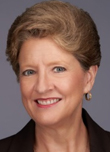 Elizabeth White is chief operating officer and cofounder of the Orphan Therapeutics Accelerator. She has held executive-level positions at Renovacor, NeuExcell Therapeutics, and her own consulting firm, White Biotech Solutions. Before that, she was assistant vice president of commercial development for Pfizer's rare disease and gene therapy portfolio. She received her Ph.D. in cellular and molecular biology at the University of Rochester.