
The Top 10 Nations Redrawing The Outsourcing Map

By Jeffrey S. Buguliskis, PhD, Deputy Chief Editor, Outsourced Pharma
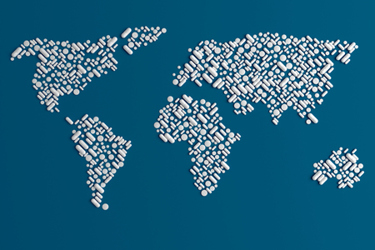
There was a time when your outsourcing strategy could be managed with a simple spreadsheet and a focus on cost-per-liter. Those days are gone…
Today, securing capacity is less about vetting a vendor list and more about navigating a geopolitical minefield. Between the insatiable capacity vacuum created by the initial GLP-1 gold rush, the looming implications of the BIOSECURE Act, and the fracturing of global trade, the physical location of your bioreactor now matters just as much as the logo on the building.
If you choose the wrong geography, you aren't just risking a shipping delay; you are risking entire fiscal quarters. That’s why smart sponsors have stopped thinking solely in terms of CDMOs and started thinking in terms of national ecosystems. Each country sets the rules of the game by dictating regulatory posture, labor volatility, incentives, and political risk. At Outsourced Pharma, we wanted to take a closer look at those regions of the globe that are actively shaping those ecosystems and provide some context for how it might affect sponsor choices in the near future.
Below is a ranking of 10 countries shaping pharma outsourcing today, based on a blend of growth rate and infrastructure investment. Use it as a field guide for where and how you place your next drug substance and drug product bets.
1. China – Scale, Price, and Geopolitical Strings
China is still the gravitational center for small-molecule outsourcing and active pharmaceutical ingredients (APIs).¹ It dominates the global supply of chemical intermediates and generic APIs, which is why even “diversified” supply chains often have China in the background.
- Sponsor insights: The appeal is clear: huge capacity, competitive pricing, and an ecosystem that can move from kilo to metric ton quickly. The trade-off is equally clear: growing regulatory scrutiny and geopolitical exposure. Which means China is increasingly the workhorse base you pair with second sources elsewhere, rather than your only pillar.
2. India – The Pharmacy Grows Up
India supplies roughly 20% of the world’s generic medicines, backed by hundreds of U.S. FDA–approved plants and more than 10,000 pharma facilities.2 That base is now evolving from pure volume to higher-value work: contract research, contract development, and biologics. Market analyses project that India’s contract R&D and manufacturing sector will roughly triple over the next decade as sponsors push more development and specialty production there.¹
- Sponsor insights: India is no longer just where mature molecules go; it’s where you can combine cost leverage with deep small-molecule know-how.

China and India still carry much of the world’s small-molecule volume, making them the default starting point for many outsourcing strategies.
3. United States – High-Cost, High-Conviction Capacity
The United States is both the biggest buyer of outsourced services and a growing provider. Outsourcing and contract manufacturing markets in North America are projected to grow robustly over the coming decade, with biologics and advanced therapies doing most of the heavy lifting.3 Domestic partners are not cheap, but they reduce time zones, regulatory friction, and political risk, especially when launching products for priority indications.
- Sponsor insights: U.S. capacity is increasingly where you park your “can-not-fail” programs or de-risk ex-U.S. supply.
4. South Korea – Biologics Mega-Campus
South Korea has become one of the world’s backbones for biologics. Samsung Biologics alone now operates five plants with a total capacity of 784,000 liters and plans to reach 1,000,000 liters within the decade.4 A national push into biosimilars, antibody-drug conjugates, and cell and gene therapies matches that scale.
- Sponsor insights: Korea offers Western-standard compliance at Asian-market rates, making it an attractive option for monoclonal antibodies and other biologics that require industrial scale.
5. Ireland – Export Engine With U.S. Ties
Ireland is a small country with an outsized influence on the drug supply chain. A large share of its exports of goods are medical and pharmaceutical products, driven by a dense cluster of big-pharma and biotech facilities serving both the U.S. and EU markets.5
- Sponsor insights: Choose Ireland for its combination of tax policy, English-speaking talent, and a regulatory environment that feels familiar if you are U.S.-based. Practically, it remains a prime choice for solid oral doses, biologics, and now the GLP-1 wave.

Italy, Ireland, and Germany now anchor much of Europe’s outsourced capacity, from complex APIs to sterile fill-finish.
6. Italy – Europe’s Quiet CDMO Powerhouse
Italy doesn’t always appear on slide 1 of corporate presentations, but the numbers are hard to ignore. Coming out of COVID-19, Italy’s pharmaceutical contract manufacturing market was estimated at about $3.5 billion, roughly 23% of all European contract manufacturing output, the largest share in the region, and is forecast to continue growing at high single digits.6 Italian sites cover everything from active ingredients to sterile fill-finish and high-potency oncology.
- Sponsor insights: Italy offers access to deep technical expertise and export-oriented capacity within the European Union. For a deeper dive, see Chief Editor, Louis Garguilo’s insightful piece, Italy: A Quiet Outsourcing Standout For Drug Manufacturing.
7. Singapore – Premium Hub for Advanced Modalities
Singapore has built itself into a tightly engineered hub for high-value manufacturing. Pharmaceutical output has more than tripled since the early 2000s, and the country now generates tens of billions of dollars in drug sales annually, including biologics and vaccines.7 Recent investments include end-to-end antibody-drug conjugate plants and expanded biologics capacity from multiple multinationals.7
- Sponsor insights: Companies rarely go to Singapore for the lowest cost; they go for risk management, intellectual property protection, and a reliable base in Asia for complex injectables and next-generation modalities.
8. Germany – Engineering for Complex Products
Germany remains Europe’s industrial anchor and a key pharma manufacturing base. It is consistently one of the top exporters of medicinal and pharmaceutical products in the European Union, supported by an extensive network of finished-dose and active-ingredient sites.8 German manufacturers and contract partners excel in complex chemistry, sterile injectables, and high-specification dosage forms.
- Sponsor insights: Germany is where you tend to place technically demanding work that needs both regulatory credibility and long-term stability.
9. Japan – Advanced Therapies, Slowly Opening Up
Japan has historically kept much of its manufacturing in-house, but that is changing. Its contract development and manufacturing market is projected to grow steadily this decade as local pharma leans on partners for biologics, antibody-drug conjugates, and cell and gene therapy programs.9 Japanese firms also operate contract assets abroad, making them relevant partners even if your product never ships to Japan.
- Sponsor insights: Japan is an opportunity to tap into high-precision manufacturing and innovation clusters in oncology and advanced therapies while diversifying your Asia footprint beyond China and Korea.
10. Poland – Eastern Europe’s Rising Node
Poland represents the broader rise of Central and Eastern Europe in pharma outsourcing. It has become a cost-competitive, European Union–regulated base for generics, sterile products, and secondary packaging, with more than 20 identified finished-dose contract facilities.10 EU initiatives to thicken regional medicine supply chains are directing investment into Poland and its neighbors, upgrading facilities and quality systems.
- Sponsor insights: Poland is increasingly becoming a sweet spot. EU oversight and market access, lower labor and facility costs than in Western Europe, and growing experience in both small-molecule and biologics support.

Sponsors that treat geography as a design parameter, not an afterthought, are the ones turning this map into a real resilience strategy.
Why Geography Matters
Sponsors are already living with the consequences of geographic decisions, both good and bad. Concentration in one region can magnify the impact of tariff shocks or regulatory actions. Spreading work across too many countries can create a tech-transfer and oversight burden you cannot realistically manage. The countries above are not an exhaustive list, but they are where a disproportionate share of new capacity, investment, and policy focus is landing.
The practical play is to treat geography as a design parameter rather than an afterthought. Map your portfolio by modality, volume profile, and risk tolerance, then decide which of these ecosystems you want as load-bearing pillars and which you wish as optionality. Use China and India for scale, Korea and Singapore for biologics leverage, Ireland, Italy, Germany, and Poland for European resilience, and the United States and Japan for high-conviction launches and advanced programs. If you get the country mix right, the CDMO short list tends to follow, and your future launch decks will spend less time explaining why a map you never questioned became your most considerable operational risk.