
The Dual Challenge Of Particle Control: How To Handle Intrinsic Product Powder Particles During Continuous Particle Monitoring
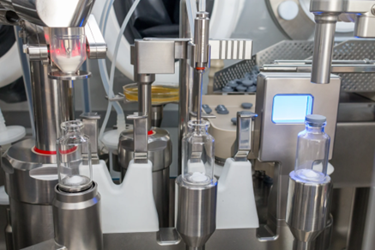
Continuous particle monitoring is required during aseptic processing, but powder filling introduces a unique challenge: the product itself generates airborne particles that mimic contamination signals. Annex 1 mandates uninterrupted monitoring at critical particle sizes, yet counters cannot inherently distinguish intrinsic product dust from extrinsic environmental contamination. As a result, routine powder‑filling operations may cause spikes, counter saturation, false alarms, and data that becomes difficult to interpret within a contamination control strategy.
To address this, manufacturers must design monitoring systems that account for predictable, product‑related particle behavior. Recommended approaches include positioning monitors away from dust plumes, relying on isolators or RABS to separate powder from clean air zones, and using intermittent or event‑based sampling when continuous data is scientifically invalid. More advanced solutions include specialized counters and particle‑profile‑based justification within contamination control documentation. Ultimately, regulators expect clear differentiation between intrinsic and extrinsic particles, scientific risk assessments, and monitoring strategies that reflect the true state of environmental control.
Get unlimited access to:




Enter your credentials below to log in. Not yet a member of Outsourced Pharma? Subscribe today.