
Oligonucleotide Scale-Up: Six Things Every Sponsor Needs To Know

By Jeffrey S. Buguliskis, PhD, Deputy Chief Editor, Outsourced Pharma

There is a phase in every promising technology when the science is genuinely thrilling, serious money is flowing in, and then suddenly everyone you meet claims they have decades of relevant experience working with it.
Oligonucleotides are in that phase right now, and this should make you both hopeful and deeply suspicious.
Now, the hope is understandable. Antisense, siRNA, guide RNAs, and related molecules are moving from a niche promise to approved drugs that are attracting real manufacturing investment. But a field can be scientifically mature enough to attract capital while still being operationally immature enough to destroy any casual assumption about outsourcing prowess. In the early stages of development, one can often scrape by with heroic lab work, tiny batches, and a contract manufacturer who knows just enough to ship something.
Yet, when you try to scale up, the same approach implodes under impurity profiles that weren't properly mapped, analytical gaps, raw material variability, purification burdens, shifting regulatory expectations, and a manufacturing slot that was "secure" right up until it wasn't.
So, before you rush into scaling up your oligonucleotide program, here are six important things to remember:
1. Verify Actual Experience, Not Marketing Claims
Plenty of outsourcing partners can talk a good game about oligonucleotides. Far fewer can show you meaningful GMP data on the specific class of molecule you're developing. A short antisense oligonucleotide isn't the same operational challenge as a long guide RNA. Familiar backbone chemistry doesn't automatically translate into a robust control strategy. Research-scale success proves nothing about clinical or commercial readiness.
Be sure to ask the awkward questions early. What molecules has this CDMO actually manufactured, at what scale, and under what regulatory scrutiny? What were the real yield losses, not the optimistic ones? Which analytical methods are fully validated, which are merely qualified, and which are still works in progress? How many other programs are competing for the same scientists, suites, and quality resources?
The most dangerous answer isn't always "we haven't done that." Sometimes it's the unassuming confidence in the response "of course we can."
2. Build The Scale-Up Plan Around Impurity Control
Scaling up isn't just about making more of your product. It's about proving you understand what else you're making alongside it.
Every coupling step adds complexity. Impurities from starting materials carry forward through synthesis. For instance, closely related species can co-elute, giving you a reassuringly clean main peak until a more discriminating method exposes what was hiding underneath.
Impurity control can't be a last-minute cleanup exercise. It has to drive your choice of manufacturer, your process development, your raw material qualification, your analytical strategy, and your regulatory planning from the very beginning. The better question isn't "Can this CDMO make our oligo?" It's "Can this CDMO help us understand the crude mixture, improve it, purify it, characterize it, and defend it in front of regulators?" That's a much higher bar, and it's what separates genuine capability from marketing.
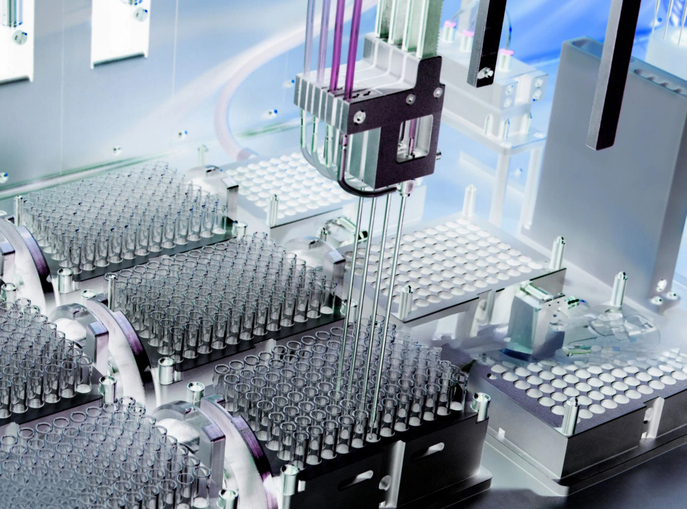
Impurity control depends on more than achieving a reassuring main peak. Sponsors need analytical methods capable of resolving closely related species and revealing how the impurity profile changes as oligonucleotide production scales up.
3. Keep Analytical Judgment In-House
Oligonucleotides test even the most experienced analytical teams. Purity, identity, sequence confirmation, related impurities, residual solvents, modified bases: every one of these has to be understood well enough to support development decisions and survive regulatory review. In many programs, the analytical methods are the only way to know if your manufacturing process is truly under control.
Not every emerging biotech can build a large analytical group. But every sponsor must retain enough internal or independent expertise to: interrogate the data a CDMO sends you, spot weak assumptions, and judge whether a method does what it claims. Sometimes that means hiring an external specialist to work in parallel with your manufacturing CDMO. You don't need to run every assay yourself. However, you do need to know what each assay is actually proving.
4. Qualify Starting Materials Before They Become A Program Risk
Scaling up puts extraordinary pressure on your supply chain because the quality of your raw materials echoes through the entire synthesis.
Phosphoramidites, modified nucleosides, linkers, solid supports: these aren't interchangeable commodities once a program moves toward later-stage development. A tiny impurity in a building block you use repeatedly can mushroom into a massive characterization problem downstream. A second supplier that looks equivalent on a spec sheet can behave differently in synthesis, purification, or analytical release.
Qualify suppliers early and understand their own impurity controls. Ask how they handle change notifications. Pressure-test the CDMO's ability to manage material variability. And think carefully before dual sourcing: having a backup supplier sounds reassuring, right up until it leaves you with two slightly different impurity narratives to explain to regulators. The best time to learn that lesson is before the process is locked.
5. Treat Purification, Sustainability, And Cost As Connected Problems
Oligonucleotide manufacturing is expensive, solvent-hungry, and generates significant waste. This is a hard manufacturing problem, not just an environmental one. At a larger scale, purification losses hit harder, solvent consumption spirals, cycle times drag, and waste disposal costs pile up. A process that seemed manageable for early clinical supply can become a commercial headache once volume, cost of goods, and reliable delivery become real constraints.
Demand that your CDMO explain the process economics before you're locked in. What actually drives cost? Where are the worst yield losses? Could liquid-phase synthesis or enzymatic approaches realistically work for your molecule, or are they still aspirational? How will the purification strategy change as scale increases? A cleaner process is often a more scalable one, and sustainability and process economics are the same conversation.
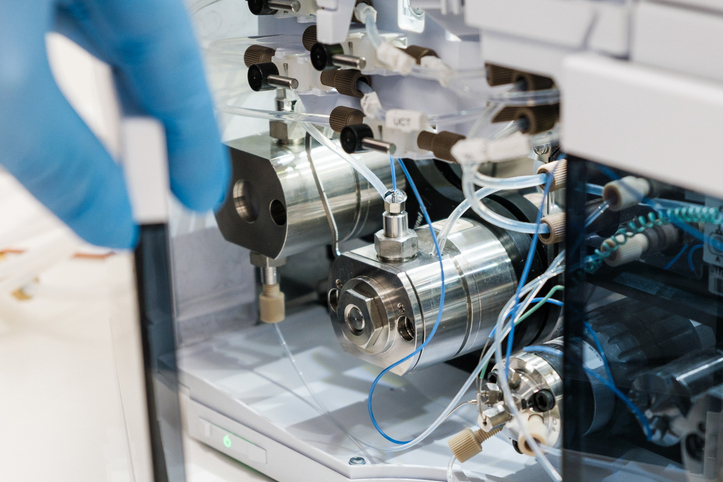
At larger manufacturing scales, purification strategy affects far more than product purity. It also determines yield loss, solvent consumption, waste generation, cycle time, and whether the process can support commercially viable production.
6. Manage Technology Transfer Like A Living System
Scale-up isn't a one-time handover of a method. It's a live, evolving system of chemistry, analytics, quality, regulatory interpretation, and capacity management.
Governance matters more than most sponsors realize. You need clarity on who decides what, clear escalation routes, agreed standards for data review, and rigorous change control, not just monthly status calls. This becomes even more critical when adding a second supplier or moving between CDMOs. The goal isn't merely to replicate a process; it's to transfer sufficient understanding to make comparable, defensible material in a different operating environment.
The sponsor must provide a complete technical package, including the history of what didn't work. The CDMO must be transparent about its gaps and any deviations from the prior process. Both sides must agree on what "comparable" actually means before the first batch triggers a dispute. The real test isn't whether a CDMO can receive a technology transfer package. It's whether the relationship is structured to keep learning after the package arrives.
The Field Is Still Young Where It Counts
Oligonucleotides aren't new. But the outsourcing environment around them still feels young in all the ways that matter. Capacity is growing, but unevenly. Experience is accumulating, but it can be patchy. Regulatory expectations are becoming clearer, but not simpler. Analytical tools are improving, and in doing so, reveal more things you now have to understand.
Sponsors who are serious need to be more demanding, and earlier. Interrogate capability before you commit. Build the program around impurity control. Keep your analytical judgment in-house. Qualify critical inputs as if they're part of the drug. Connect sustainability to process economics. Govern technology transfer with real discipline.
The companies that do this will still encounter hard problems. But they'll encounter far fewer nasty surprises. And in oligonucleotide scale-up, avoiding surprises is about the closest thing to speed you'll ever get.