
It Depends: The Real Answer To The Single-Use Or Stainless-Steel Question
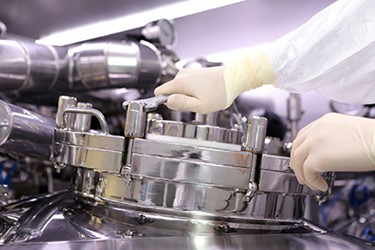
During the past decade there have been innumerable comparisons between stainless steel and single-use (SU) biomanufacturing systems. Issues such as capacity, scale-up, and flexibility dominate these discussions, and for good reason, considering each has a specific effect on the cost a sponsor will incur. Other topics evaluated as part of this comparison include energy usage, cleaning validation, cross-contamination risks, and the disposal of plastic waste.
But anyone who has delved even slightly deep into this topic knows there isn’t a simple, clear cut answer to which system is “best.” Yes, over the years there have been improvements to SU technologies (e.g., level of extractables and leachables), and the increase in cell culture titers and advances in cell line expression have furthered the use of single-use bioreactors even for some commercial production. Stainless steel systems, though, are still being built and will play a pivotal role in the production of new biologics that will require huge volumes for larger patient populations (e.g., Cancer, Alzheimer’s, diabetes). The reality is that stainless steel and SU can and will coexist – and often do in today’s hybrid bioprocessing manufacturing environments.
CONSIDER THE TRUE COST OF LABOR IN BIOPROCESSING
According to research cited in Elsevier’s 2017 Biopharmaceutical Processing: Development, Design, and Implementation of Manufacturing Processes book, contract manufacturers that have high-volume capabilities can produce monoclonal antibodies (mAbs) for as low as $60 per gram. Dan Slone, VP of manufacturing operations at Samsung BioLogics, says that much of those overall savings come from the lower labor expenses associated with a stainless-steel operation. “Since single use almost always includes some sort of plastic bag system [e.g., bioreactor, transfer bag, buffer bag], you have to first obtain that item and unpack it,” he explains. “Then you have to install it in whatever container it is designed for, do all the setup, and make all the connections to and from everything that's going to be attached to that system. Then you need to set up all the peripherals around it and get everything up and running and tested.”
In contrast, with a stainless-steel system, most everything is already put together. In a plant like Samsung’s that includes a lot of automation, with the push of a button (key stroke) a bioreactor or tank can be cleaned, and another button push will sterilize a tank. “Sure, I might have to install some filters in line, but you’d have to do that with a SU system, too,” Slone says. “It's a bit simpler and a lot less labor intensive with a fixed system, though.”
DISPOSAL COSTS & COMPATIBILITY TESTING
Beyond setup and preparation, which constitute the bulk of labor, SU systems require additional time and manpower for tear down and disposal. This, again, is an issue that’s been discussed at length over the years with many companies implementing specialized recycling programs and having to familiarize themselves with stringent regulations and waste treatment protocols. “This can be a big problem, especially if there are residuals in some of these bioreactors, containers, or buffers,” Slone says. Many years ago, when I was working at a different company, we wanted to implement disposables in one part of our operation. But after we calculated in the disposal costs, we decided to scrap the whole idea.”
Slone adds that the most common statement he hears from clients regarding using single use over stainless is that they don't have to do cleaning validation with single use. However, he notes that with SU you do have to perform compatibility testing, which isn’t cheap, but at least it's a one-time expense. “You have to put together a matrix of all your buffers and solutions and show that there's compatibility there and that there's no leachables and extractables,” he explains. “We evaluate this every time a client incorporates a bag into their system. If they tell us to use a bag, we confirm with them that they’ve already done compatibility testing.”
A HYBRID SYSTEM IS “THE NEW NORM”
Of course, as noted earlier, hybrid SU/stainless steel systems are commonplace today. Obviously, the choice of which technology to use -- and when -- depends upon the stage of drug development process and a company’s goal for that product at that time. For instance, are you at the commercialization stage or are you just preparing enough material to enter the clinic? If you’re just doing a proof of scale, you probably don’t need a larger stainless-steel system. “Let's say I have a small volume prep of a media or a buffer,” Slone says. “We would put it into a single-use bag instead of a vessel of some sort. We may also use a wave bag in the early inoculation phases for the cell growth instead of using a small-volume bioreactor.”
As a manufacturing veteran with 30+ years of experience in the biopharmaceutical industry, Slone has experienced the rise in interest of SU systems in conjunction with improvements in the technology (e.g., better seams, ports/connections, internal mixing systems). The proliferation of new smaller biotechs during the past 20 years has created a scenario Slone refers to as “the new norm.” These are the situations where a company is too small or doesn’t have the capital to invest in their own manufacturing facility, so they start out with a CMO using SU for Phase 2 or even Phase 3 studies. As they prepare for later phases that require larger volumes (5,000L, 15,000L) they begin to look at transitioning some parts of the process to stainless-steel systems. “We see this all the time; once a company’s drug volume reaches 1,000L they start to question if they should move into a stainless environment. That’s exactly why at Samsung BioLogics we offer both technologies, so we can fit just about any scenario a company is working on into our facility.”
MAKING THE TRANSITION
As you would expect, there’s a certain amount of testing that precedes transitioning your material into a 5,000L or 15,000L bioreactor when you’ve previously used only SU systems. You’ll need to come equipped with information such as energy transfer rates from your smaller-scale systems so they can be equated to the larger models. “Most often, we start at a 10L bioreactor in our Process Development lab,” explains Slone. “We always do comparative test runs to prove to clients that what we do at this very small scale always works and will expand into our full-sized operation without any issues. That's a sort of a proof of concept for the tech transfer.”
THE FUTURE OF LARGE-VOLUME BIOLOGICS MANUFACTURING
One of the biggest questions in the industry today is: Will there be a greater need in the near future for large-volume manufacturing of antibodies? Samsung BioLogics obviously thinks there will be; after all, they recently finished building their third manufacturing facility for that exact reason. “We're finding that a lot of companies with new processes want to go to larger-volume operations with a fewer number of lots,” Slone explains. “It’s an economic decision. They can get their one- or two-year supply quickly, and in doing so, they reduce a lot of testing costs. So, instead of making 25 or 30 batches using a 1,000L or 5,000L system, they move up to a 15,000L system and make five to six batches, and it actually ends up being more cost effective.”
With scrutiny of the biopharma industry as a whole at an all-time high with no immediate end in sight, the spotlight on identifying cost savings in all phases of drug manufacturing is unlikely to fade. That’s why it’s more important than ever to understand when to employ both SU and stainless-steel systems, because they each have their place.