
Industrial Chromatography: A Guide To Scale-Up And Purification For Small & Large Molecules
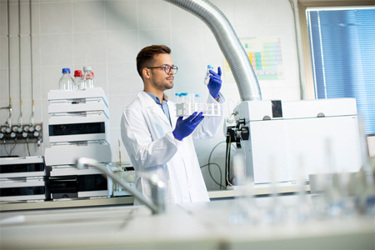
Industrial chromatography has come a long way — from its early use in separating plant pigments to becoming a cornerstone of modern pharmaceutical manufacturing. Its evolution accelerated during the penicillin era, expanded with the adoption of HPLC for synthetic drugs, and took another leap forward with the rise of biologics, where affinity-based purification became essential. Today, it plays a critical role across manufacturing, supporting purification, analytical quality control, chiral separations, and even solvent recovery.
The way chromatography is applied depends heavily on the molecule. Small-molecule processes typically rely on high-pressure reverse-phase systems to separate closely related impurities with precision. In contrast, large-molecule workflows — especially for biologics — favor gentler techniques like affinity and ion-exchange chromatography to maintain structural integrity. This is where tools like Protein A resins shine, selectively isolating a target protein from complex biological mixtures.
Scaling these processes, however, introduces real engineering challenges. What works seamlessly at the bench doesn’t always translate directly to production — flow behavior changes, resins compress, and distribution becomes harder to control. As one expert insight puts it, physics behaves differently in a large column than in a test tube.
Even as a well-established technology, chromatography continues to evolve, with advances in continuous processing, single-use systems, and more sustainable solvent choices shaping its future.
Get unlimited access to:




Enter your credentials below to log in. Not yet a member of Outsourced Pharma? Subscribe today.