
How AI Is Rewriting Tech Transfer Timelines

By Jeffrey S. Buguliskis, PhD, Deputy Chief Editor, Outsourced Pharma
By replacing trial-and-error with virtual simulations and predictive analytics, AI is giving even small biotechs the process development capabilities once reserved for Big Pharma—and slashing tech transfer timelines in the process
Transferring a drug process from the development lab to a manufacturing plant, particularly to a CDMO, can feel like rebuilding a complex machine in a new workshop using only a tattered instruction manual. Critical details often get lost in translation, and teams may spend months tweaking and troubleshooting. Now imagine having a virtual replica of that machine—a digital twin—and an AI co-pilot that flags which parts won’t fit and suggests the best adjustments. Suddenly, the assembly flows faster and with far fewer surprises. This is the promise of artificial intelligence in tech transfer and scale-up. AI-driven simulation, predictive modeling, and data-crunching tools are accelerating the handoff between biopharma sponsors and their CDMO partners, turning what used to be a drawn-out trial-and-error endeavor into a more streamlined, “right-first-time” process.
From Trial-and-Error to Digital Twins
Instead of laborious experimentation at each new scale, companies are increasingly leveraging AI-powered modeling to test and optimize processes virtually before any physical transfer. "One of the most valuable contributions of AI to process development is the ability to explore operating conditions virtually before running any material," explains Vadim Klyushnichenko, Ph.D., vice president of Bio/Pharmaceutical Development and Quality at the Calibr-Skaggs Institute for Innovative Medicines and a member of the Outsourced Pharma Editorial Board. Moreover, Klyushnichenko’s 25+ years of experience led him to publish a recent book pertinent to our discussion, entitled “Artificial Intelligence in Biopharmaceutical Process Development, Manufacturing, and Quality.”
These digital twin simulations integrate lab data, historical runs, and CDMO equipment parameters to predict how a process will behave at manufacturing scale. Engineers can pinpoint optimal agitation speeds, feeding schedules, or chromatography settings on a computer model, rather than running dozens of empirical batches. Nonlinear scale-up effects—mixing inefficiencies or oxygen limitations that go unnoticed in small beakers—can be identified in advance, allowing sponsors and CDMOs to adjust parameters and avoid unwelcome surprises.
Klyushnichenko notes that digital twins allow both teams "to test operating conditions virtually and align on expectations before any material is run," helping resolve potential incompatibilities early. This means fewer failed runs and less back-and-forth once the process is in the CDMO's hands.
And, in case you were wondering, yes, real-world validation is already here. In our correspondence, Klyushnichenko notes that Pfizer has used GPU-accelerated computational fluid dynamics models to simulate mixing and oxygen transfer in cell culture bioreactors. After validating the model with small-scale experiments, they virtually scaled up to large production tanks, dramatically reducing the need for physical trial runs. The digital model even revealed oxygen gradients and shear forces nearly impossible to measure in real life, replacing traditional trial-and-error with predictive confidence.
This shift from physical experimentation to predictive modeling translates directly into faster project timelines, a critical advantage in today's competitive biopharma landscape.
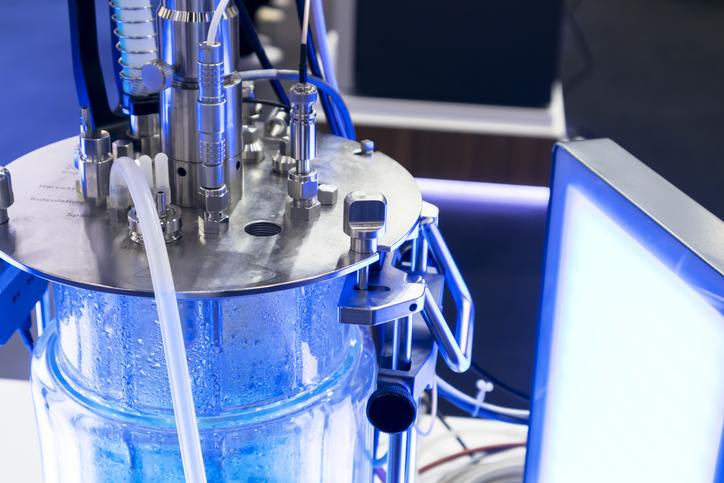
Digital twin models of bioreactors can reveal mixing and oxygen-transfer issues that are nearly impossible to measure directly—turning scale-up guesswork into simulation-driven decisions.
Shorter Timelines, Smarter Transfers
Traditional tech transfers for complex processes can stretch 18 to 24 months as teams iterate through adjustments, documentation revisions, and scale-up surprises. By contrast, early adopters of digital tools report significantly compressed timelines. One analysis cited reducing a typical transfer from around 20 months to roughly six months.
"Shortening tech transfer from twenty months to six is possible, but only when the process is well-understood, and the underlying data are complete and well-organized," Klyushnichenko cautions. AI can't fix disorganized data or an inherently shaky process. But with solid groundwork, it eliminates many unnecessary delays.
The most significant time savings come from reducing manual work and avoiding missteps. AI/Machine Learning (ML) models can automate data extraction and standardization from lab notebooks and batch records, assembling a comprehensive tech transfer package in hours instead of weeks. ML can also predict scale-up risks, highlighting which parameters are likely to drift out of spec or which reagents might stress new equipment, enabling proactive solutions.
To set realistic expectations, sponsors should weigh factors like process complexity and digital readiness. A highly innovative cell therapy process won't compress as easily as a well-characterized mAb process. If data is scattered in paper reports and Excel files, there's preliminary work to do. "Most tech transfer delays trace back to missing or inconsistent information," Klyushnichenko stresses. Underscoring that clean, well-organized data is key to unlocking AI's speed advantage.
AI as the Small Biotech's Best Friend
Not long ago, only large pharma companies with hefty process development teams could thoroughly characterize their processes before manufacturing. Smaller biotechs often learned by doing—and sometimes failing—during tech transfer. AI is changing that equation, effectively giving emerging sponsors a virtual process development team.
Early-stage companies can use AI-driven software to scout optimal process routes and scale-up strategies in silico, catching pitfalls before they hand off to a CDMO. This early insight "prevents costly redesigns later and gives smaller teams a level of technical readiness that would otherwise require far more resources," notes Klyushnichenko.

For smaller sponsors, AI-driven route scouting and scale-up analysis act like a virtual process team—helping them walk into CDMO discussions with a far more mature technical package.
AI particularly aids small sponsors with process robustness. Some firms even offer AI-based "route scouting" services that rapidly evaluate thousands of synthetic routes or process variations. Instead of relying on a handful of chemists, a startup can identify a scalable, cost-effective path more likely to run smoothly at the CDMO. AI can also sift through prior data from analogous products to flag which critical process parameters matter most, steering limited lab experiments toward conditions with the highest probability of success at scale.
The result is a more level playing field. Smaller biotechs benefit enormously from AI precisely because they lack the deep process development infrastructure of larger companies. Moreover, having an outsourcing partner that embraces digital tools or uses AI-driven analysis in early development, even for lean startups, can help them approach tech transfer with greater confidence and competence.
Toward the "Intelligent CDMO" Partnership
As AI becomes ingrained in tech transfer, CDMOs are evolving into more digitally empowered partners. Industry thought leaders envision an "Intelligent CDMO" where an AI agent works hand in glove with the sponsor's team, autonomously analyzing process data and immediately proposing optimal scale-up plans by selecting equipment, suggesting tweaks, estimating timelines, and flagging risks before human meetings even occur.
"Meaningful progress is being made," Klyushnichenko says, noting that many CDMOs today use AI tools to map client process data to their equipment and predict scale-up pitfalls. A forward-looking partner might employ advanced analytics to compare a sponsor's formulation parameters with its historical manufacturing database, immediately pinpointing troublesome settings. Or they may use machine learning to optimize equipment set-points for yield and quality.
Data compatibility and integration remain among the biggest hurdles. An AI can only be as insightful as the data it's fed, and sponsors and CDMOs often need to harmonize their formats and definitions. Still, as data standards improve and trust in AI grows, the vision of an intelligent CDMO is moving from imagination to implementation. Sponsors should expect their partners to progressively offer more AI-driven insights as part of the tech transfer package, not in some distant future, but in their next project.
Putting AI to Work in Your Next Tech Transfer
AI in tech transfer offers realistic optimism for biopharma sponsors. It won't instantly automate the entire process or make human expertise obsolete, but it is already a powerful accelerator and de-risking tool when applied pragmatically.
For sponsors looking to leverage these capabilities, a few actionable steps stand out. First, invest in data housekeeping: ensure development data, from critical process parameters to analytical results, is structured and shareable. Next, focus on high-value applications rather than overhauling everything at once. Pilot an AI-driven modeling project for a challenging unit operation, or use an NLP tool to auto-compile batch records, and learn from those wins. Early alignment with your CDMO on digital tools is also key. If you plan to use specific modeling software or data formats, loop in your outsourcing partner early so AI insights can be translated directly into decisions.
Finally, approach AI as an enhancement to your team's expertise, not a replacement for it. As Klyushnichenko puts it, "At the end of the day, you are the project owner, and the CDMO and AI are powerful tools in your hands. Choosing the right tools lets you shape and sculpt your development program with far greater efficiency and confidence."
Sponsors who combine their process knowledge with the predictive power of AI can turn tech transfer from a notorious bottleneck into a competitive advantage. The age of AI-accelerated tech transfer is here, and those prepared to embrace it will be handing off projects at high speed, with confidence that their scale-up will be their best yet.