
From Lipid Screening To Commercialization
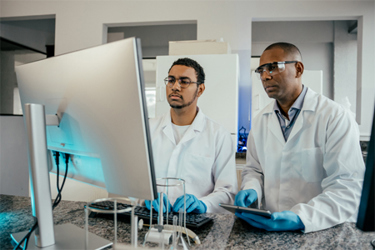
Scaling lipid nanoparticle (LNP) components from early discovery to commercial GMP production is where a lot of programs quietly lose time and yield. Purification, in particular, is the step that separates a workable process from a commercially viable one. Curia's approach starts with retroactive impurity analysis, traces those impurities back to their origin in synthesis, then optimizes the synthesis itself to minimize them upstream. The result is fewer chromatographic steps needed downstream, which keeps timelines shorter and costs lower without compromising quality.
On the manufacturing side, the capability range is genuinely broad: custom ionizable, PEG-, and phospholipids for LNPs; chromatographic columns from 16 L to 500 L across normal phase, reverse phase, and ion exchange; multiple manufacturing lines with capacity up to tons; and analytical methods development covering both chromophoric and non-chromophoric detection via CAD. GMP and non-GMP scale-up, cold storage, reference standards, and regulatory support are all part of the package.
Operations span Albany (USA), six European sites including Valladolid, Frankfurt, and Origgio, and Hyderabad in India. If your LNP program is approaching a scale-up inflection point, visit curiaglobal.com to see how Curia's integrated model maps to your timeline.
Get unlimited access to:




Enter your credentials below to log in. Not yet a member of Outsourced Pharma? Subscribe today.