
Dynamic Flux Analysis Offers Faster Metabolic Modeling Than DOE

A conversation with Hardik Dodia, Ph.D., bioprocess expert , and Life Science Connect's Executive Editor Jon O'Connell
The push for higher titers and more efficient bioprocessing is increasingly moving away from trial-and-error toward the predictive power of metabolic modeling. While traditional design of experiments (DOE) remains an industry staple, it often fails to capture the fluid, real-time shifts in cellular metabolism that occur during a production run. At the recent CHI PepTalk in San Diego, we met with Hardik Dodia, Ph.D., a bioprocess expert, to discuss dynamic flux balance analysis (FBA), which offers a more agile alternative.
Unlike static FBA, which assumes a steady state, dynamic FBA allows researchers to perform flux analysis throughout the entire process. By continuously analyzing spent media, researchers can estimate reaction rates at regular time points, providing a granular view of cell metabolism. Dodia explains that this method creates an iterative, three-step loop consisting of (1) performing the process to collect time course samples, (2) performing spent media analysis and, (3) understanding metabolism using metabolic model to overcome metabolic bottlenecks experimentally
This approach is particularly valuable for identifying process bottlenecks and can be scaled from laboratory experiments to commercial-phase bioreactors by maintaining a consistent oxygen transfer rate (OTR). Whether a developer is working with complex media (ex. yeast extract) or chemically defined media, dynamic FBA offers a faster route to process intensification.
Can you help us understand the difference between dynamic flux balance analysis (FBA) and static FBA?
Dodia: Static FBA assumes a steady state for the whole set of reactions. What we're trying to do is balance all the reaction fluxes in a genome-scale metabolic model. In our case, we were trying to perform flux analysis over a course of time throughout the process. We assume pseudo-steady state at all the time points. Since it is a dynamic process, the whole flux balance analysis is now called a dynamic FBA. We’re continuously performing spent media analysis and trying to estimate the reaction rates at each time point, rather than performing FBA at a single time point.
You describe a simple, iterative loop that cycles through fermentation, spent media analysis, and process adjustment. Can you break down the steps in that loop?
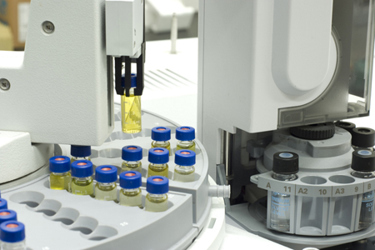
Dodia: Let's take a process that is well known. The composition of the media and the process parameters are well known, and your goal is to intensify the process and increase titer. You collect the samples at all the time points in the process, then you perform the spent media analysis, which is a technique that requires some highly-advanced instruments, like a mass spectrometer, or Raman spectroscopy.
Once you perform this analysis, you end up getting the composition of the substrates present in your media. Several components of this media are either consumed or secreted. Once you have this data, you can use it to perform metabolic modeling via dynamic FBA, which uses available genome-scale models from public repositories. You fit the experimental data on the genome scale model and estimate all the intercellular reaction rates or fluxes. In general, this will give you the insights about the details of exactly what is happening within the cell, like:
- cellular metabolism,
- how many pathways are active,
- how many pathways are inactive,
- which pathways are highly useful or are most important for the product of interest.

From there, you can tweak the pathways and find out what might be limiting in your process, both from the media perspective as well as other process parameters. One such example is identifying the limiting substrates in the media or oxygen-limiting conditions in our process.
In short; this becomes an iterative, three-step loop: You perform the process and get the samples, perform spent media analysis and modeling for metabolic insights, tweak the process again, and so on. With every step, you keep on enhancing the recombinant protein titer.
Of course, there would be a limitation to the number of iterations that you may perform. The cell will have its maximum capacity to retain that protein within its structure. So, you can only improve the production within the limitations and the capabilities of the cell. But we believe that dynamic FBA is a faster process compared to other techniques like design of experiments (DOE)requiring a large number of trials.
Is it accurate to state that DOE doesn't appreciate the dynamic nature of metabolism compared to dynamic FBA?
Dodia: Yes. DOE doesn't cover a large number of process dynamics because we change the process variables all at once in different trials in DOE and compare the final productivity.
Is dynamic FBA scalable in clinical- or commercial-phase bioreactors? Is oxygen transfer rate (OTR) a factor?
Dodia: The OTR is a crucial parameter, and we have observed in several experiments that, whenever we want to scale up, we must retain the OTR. It is a fairly simple process. You need to calculate the OTR at your smaller scale and then retain that OTR in your large-scale bioreactor. We have observed that the experiments replicate and reactors achieve the same productivity.
Your work relied on complex media: yeast extract. Does the same iterative modeling loop still work for something more chemically defined?
Dodia: It will work with either complex or defined media. You are free to use it with either type of process.
About The Expert:
 Hardik Dodia, Ph.D., is a postdoctoral scholar at the University of California San Diego. He is an expert in bioprocessing, metabolic modeling, and metabolomics. He received his Ph.D. from the Indian Institute of Technology, Bombay. Previously, he worked as a consultant for Resolve Biotech in Mumbai, developing cell culture media solutions.