
BIOSECURE Act And The 8 Supply-Chain Lessons Sponsors Can't Ignore

By Jeffrey S. Buguliskis, PhD, Deputy Chief Editor, Outsourced Pharma

A supply chain is less like a chain than a root system. Some roots are thick and visible: the primary CDMO, the lead analytical lab, and the preferred supplier. In contrast, others are fine as hair and buried deep: a reagent, a subcontracted test, a data handoff, an affiliate, or a backup site that was never truly independent. Most of the time, the system holds because nobody is pulling on it.
The BIOSECURE Act pulled.
It didn't create biopharma's exposure to China. It revealed it. For years, development teams made rational decisions in a globalized market: move faster, buy expertise, conserve internal bandwidth, and rely on partners who could carry programs from discovery support through development and manufacturing. Then the political weather changed, and a practical question became unavoidable: which parts of the program are merely global, and which are fragile?
That's the real lesson. The BIOSECURE Act is not just a Washington story. It's a stress test. It asks whether companies actually understand the routes their molecules travel, the dependencies hidden beneath their timelines, and the cost of replacing a partner after the ground has already shifted.
But here's the tension worth holding on to: China remains deeply relevant to global innovation. In February, Reuters reported that China's out-licensing reached a record $137.7 billion in 2025, with global drugmakers continuing to scout China-developed assets. Program leads may be reducing exposure to manufacturing while simultaneously pursuing scientific, clinical, or commercial opportunities tied to Chinese innovation. The smarter approach is segmentation: separating by manufacturing dependency, data sensitivity, federal funding exposure, clinical supply risk, and licensing opportunity, rather than blanket avoidance.
Panic isn't a plan, but neither is denial. And what supply-chain teams need now isn't a slogan about China, but a sharper way to see their own networks. That sharper view starts with eight practical lessons, each less about political reaction and more about sponsor control: knowing what's exposed, what's replaceable, what's defensible, and what could quietly become a program-level risk.
Lesson One: Your Approved-Vendor List Is Not Your Supply Chain
Most sponsors know their direct vendors. Fewer know the second- and third-tier dependencies that make those vendors work. The Congressional version of the BIOSECURE Act targets biotechnology equipment and services from "biotechnology companies of concern," but the practical issue is broader than any list of named entities. China exposure can hide in testing, sequencing, cell-line work, plasmids, raw materials, data handling, subcontracted development, or a "backup" relationship that still runs through the same constrained geography.
For instance, consider the scenario of a mid-size sponsor that learned, during an acquisition diligence process, that its primary CDMO subcontracted a critical analytical step to a Chinese affiliate, a relationship that didn’t appear in the original vendor agreement. The exposure was real, the timeline impact was real, and it was discovered only because a buyer asked the right questions. For most programs, no one asks those questions until it's too late.
The vendor map needs to be converted into a dependency map. Not "who do we pay?" but "who touches the molecule, the method, the data, the release decision, and the critical material?"
- Takeaway: If you haven't mapped beyond your direct vendors, you haven't mapped your supply chain.
Lesson Two: The BIOSECURE Act Is Now Procurement Gravity, Not Just Political Theater
Whether or not every legislative detail lands exactly as written, the direction of travel is hard to miss. The 2025 Senate version keeps the core concept alive: federal contracting, grants, loans, biotechnology services, equipment, and companies tied to foreign-adversary risk. Even before final implementation, these changes are already affecting how investors, boards, legal teams, and procurement groups evaluate exposed relationships.
The lesson is simple: don’t wait for a final rule to start scenario planning. If a partner could become hard to defend in diligence, financing, partnering, government funding, or regulatory discussions, it already belongs on the risk register.
- Takeaway: The rule doesn't need to be final to create real risk. Perception and investor scrutiny move faster than legislation.
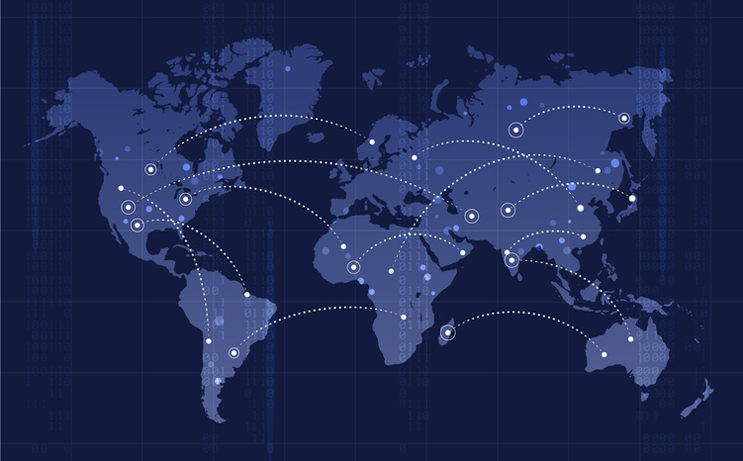
The BIOSECURE Act has moved China exposure from a vendor-management issue to a network-mapping exercise. Sponsors need to understand not only who they contract with, but also which hidden nodes support manufacturing, testing, data flow, and critical materials.
Lesson Three: Redundancy Is Not Resilience Unless It Has Been Tested
A second supplier in a spreadsheet is not the same as a qualified alternate. A backup CDMO that has never run the process, never transferred the method, never touched the analytical package, and never been written into regulatory strategy isn’t real resilience. It’s wishful thinking.
Alternate capacity has to be operational, not theoretical. That includes method transfer, material availability, comparability strategy, quality agreements, data access, batch-history review, and realistic lead times. The uncomfortable question is not "do we have a Plan B?" It is: "Could Plan B make releasable material on the timeline the program actually needs?"
- Takeaway: A backup that has never been qualified isn’t a backup. It's a plan that hasn't been tested.
Lesson Four: Audits Have To Become Continuous, Not Ceremonial
The inspection climate is moving toward less warning and more targeted scrutiny. The FDA has expanded its use of unannounced foreign inspections, issued draft guidance on responding to Form 483 observations, and launched one-day inspectional assessments to broaden oversight reach. The signal is clear: inspection readiness cannot be a quarterly ritual or a binder built before a visit.
Oversight has to move from episodic audit to continuous intelligence. That means live quality metrics, visibility into deviations, repeat-observation tracking, change-control discipline, and a clear escalation path when a partner's compliance profile starts to drift. A partner that looks clean on a checklist but is accumulating unreported deviations is a program risk that won't announce itself.
- Takeaway: If your oversight depends on scheduled visits, you're measuring what partners prepare, not what's actually happening.

In a more scrutinized inspection environment, sponsor oversight cannot depend on periodic audits alone. Quality metrics, deviation visibility, change-control discipline, and reliable data access all contribute to supply-chain resilience.
Lesson Five: Digital Traceability Is The New Trust
China's exposure is not only about geography. It is also about data. The BIOSECURE Act’s language around multiomic data, biotechnology services, and foreign-adversary control reflects a larger shift: data provenance, access, and transfer are becoming core dimensions of supply-chain risk. In a world of outsourced development, the existence of a batch record does not guarantee that the data trail is clean, controlled, or auditable.
Digital traceability should become a contracting and governance requirement, not a due diligence discovery. Raw data access, audit trails, system ownership, subcontractor visibility, use of artificial intelligence in analytical workflows, electronic records standards, and data location rules should be defined before work starts, not negotiated after a regulatory question arises.
- Takeaway: Data you can't trace, access, or audit is not data you can defend.
Lesson Six: Contamination Control And Biosafety Are Supply-Chain Topics
Supply-chain risk is often discussed as if it begins and ends with capacity. It does not. A fragile network also breaks down through contamination events, weak environmental monitoring, inadequate segregation, mishandling of high-potency compounds, or poor biosafety controls for advanced modalities. That is especially acute as development teams rely on specialized partners for cell and gene therapies, antibody-drug conjugates, viral vectors, and other complex platforms, where a single contamination event can destroy months' worth of irreplaceable material.
The practical lesson is to evaluate facility logic, not just capability claims. Can the partner explain contamination control across people, materials, equipment, utilities, waste, and adjacent programs? Can it show how biosafety is embedded in facility design and operations, not just in paper procedures? Capacity without control is not resilience; it is a liability waiting for a trigger.
- Takeaway: A partner's capacity is only as reliable as its contamination controls. Evaluate both, or you've evaluated neither.
Lesson Seven: Reshoring Is A Capability Stack, Not A Zip Code
The policy environment favors more regional resilience. The European Commission's Critical Medicines Act points toward strategic projects, procurement tools, and reduced dependence on single suppliers. In the U.S., the broader policy mood is pushing critical manufacturing closer to trusted networks. But geography alone does not solve method transfer, workforce depth, analytical maturity, regulatory history, or fill-finish bottlenecks. Moving a process to a domestic address does not automatically make it a functioning, qualified, and regulatorily defensible operation.
"Move it out of China" is not a strategy. The better question is: what capability stack does this program need, where does it exist today, what will transfer cost in time and money, and what new risks, including workforce gaps, single-source raw materials, and comparability challenges, are created by moving?
- Takeaway: Reshoring without capability transfer just trades one supply-chain vulnerability for another.

Rethinking China exposure does not mean treating every China-linked relationship the same way. Sponsors need to separate manufacturing dependencies, data sensitivity, federal funding exposure, licensing opportunities, and long-term market access before deciding what stays and what moves.
Lesson Eight: China Is Still A Pipeline Story
The easiest BIOSECURE Act narrative is reductive: China equals risk, full stop. The real story requires more precision. China remains one of the most productive sources of early-stage drug discovery globally, and the out-licensing numbers reflect that. Program leads who apply the same logic to manufacturing dependencies as to licensing opportunities will make bad decisions in both directions.
The smarter framework is segmentation. Not every China connection carries the same risk profile. Not every China connection creates the same value. A licensing deal for a novel mechanism is a different conversation from a sole-source API supplier or a data-sharing arrangement with a sequencing partner, both of which are subject to foreign-government access rules. Treating them identically, either as equally dangerous or equally acceptable, is a failure of analysis, not a risk-management strategy.
- Takeaway: Blanket avoidance is as poor a strategy as blanket acceptance. The discipline is in knowing which connections are which.
Where The Roots Still Hold
The BIOSECURE Act is not forcing development teams to choose between global ambition and operational caution. It is forcing them to admit that the two must be managed together, with real visibility into the network beneath the program.
The root system is still there. Some China-linked relationships may remain useful, defensible, and strategically important. Others now carry risks that are too concentrated, too opaque, or too hard to explain to investors, regulators, or patients. The point is not to replace every root at once. It is to know which ones feed the program, which are tangled around sensitive data or critical supplies, and which would leave the whole organism starved if suddenly cut.
The organizations that navigate this best will not be the loudest. They will be the ones who map carefully, act early, and build sufficient redundancy so that a single political shock does not become a clinical or patient-supply crisis.
The BIOSECURE Act pulled on the roots. Now comes the harder work of deciding what is strong enough to keep growing.